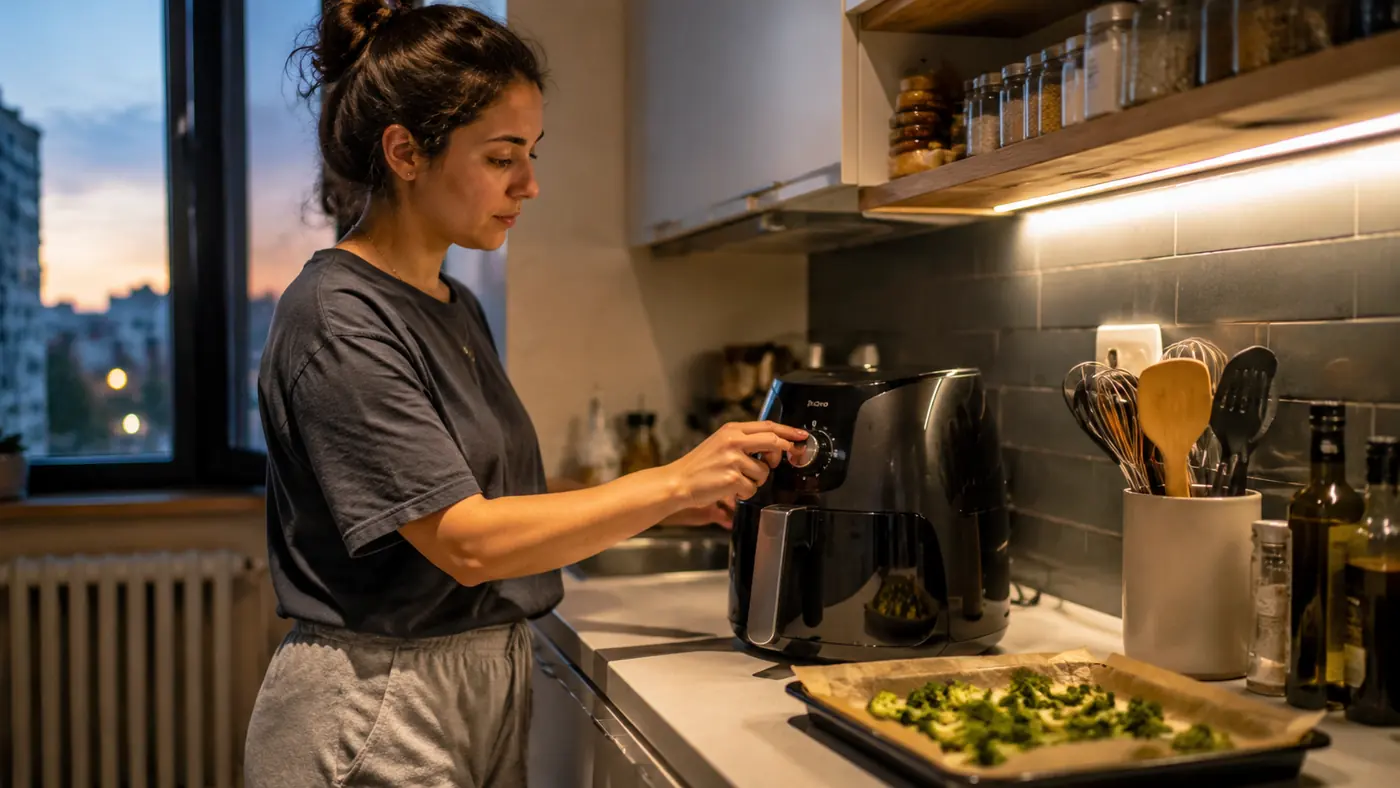
Most nights I get home from work around 6:15, and by 6:45 I want to be sitting down with a plate in front of me, not still standing over a stove. That math only works because I figured out how to cook fast meals with the Dash Air Fryer instead of fighting my old toaster oven or a stovetop that takes ten minutes just to preheat a pan. I'm Bethany Kohl, I live in a 500-square-foot apartment with a narrow galley kitchen, three feet of usable counter, and two outlets that both sit behind where my dish rack lives. Every appliance I own has to earn its spot, and the DASH Tasti-Crisp has earned its spot specifically because it's fast, not because it's fancy.
This isn't a review. I've written that one separately if you want the long-term version of how it's held up. This is the actual process I use, step by step, to get real food on the table in twenty minutes or less on a weeknight, in a kitchen where I genuinely don't have room to have three pots going at once. If you're new to using an air fryer for speed instead of just for crisping frozen snacks, this is the exact sequence that's worked for me across roughly six months of nightly use.
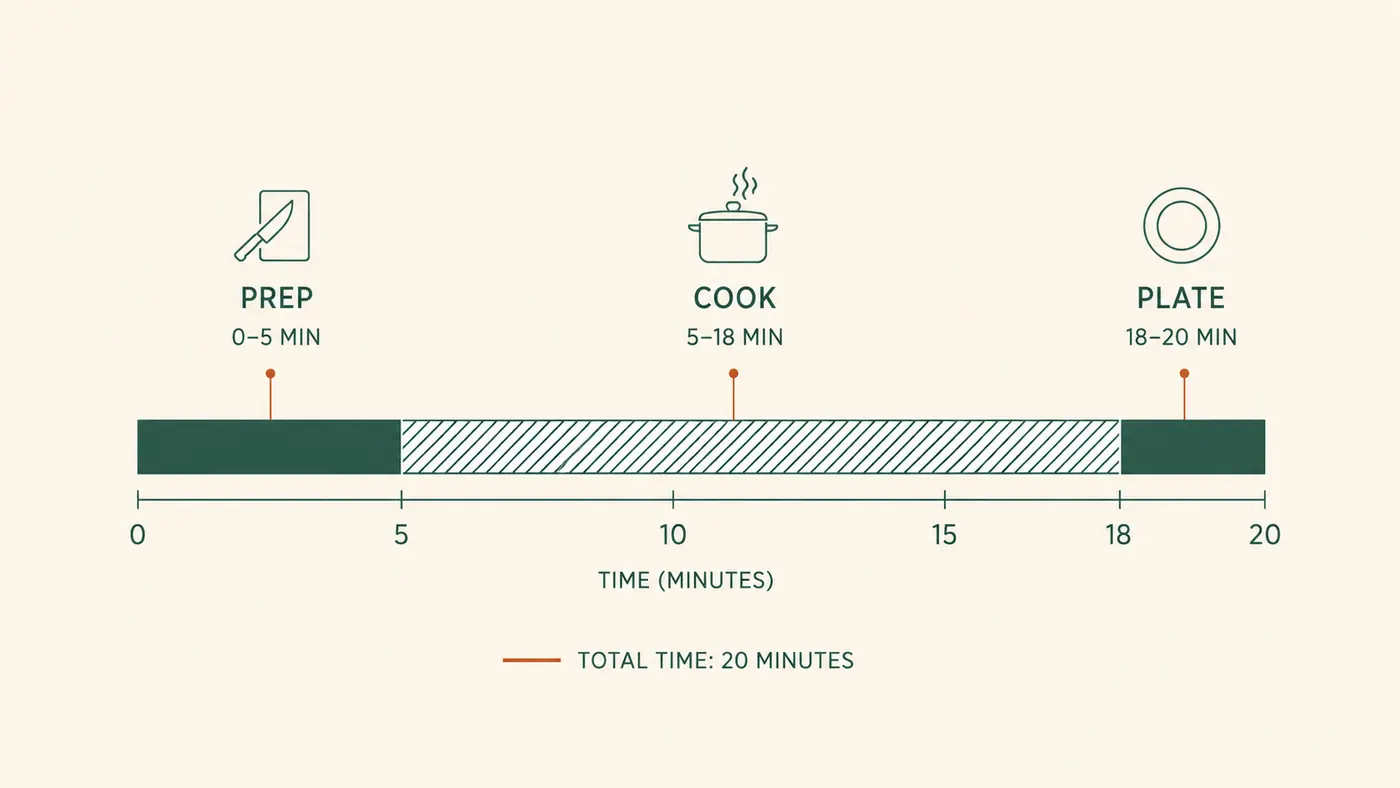
When I say fast, I mean it in real minutes, not marketing minutes. A weeknight meal that takes me twenty minutes start to finish, from pulling frozen chicken tenders out of the freezer to sitting down at the table with Danny, used to take closer to forty when I was still using my old toaster oven and a stovetop pan for the vegetable side. The gap isn't really about how hot the appliance gets. It's about cutting out every step where I'm standing around waiting on something, which is exactly what the five steps below are built to do.
The Appliance That Makes This Whole System Work
None of these steps matter if the appliance itself is slow to heat, awkward to load, or too bulky to keep on your counter. The DASH Tasti-Crisp is the one I built this entire fast-meal routine around.
Amazon Check Today's Price on Amazon →Step 1: Pick a Protein That Doesn't Need Defrosting
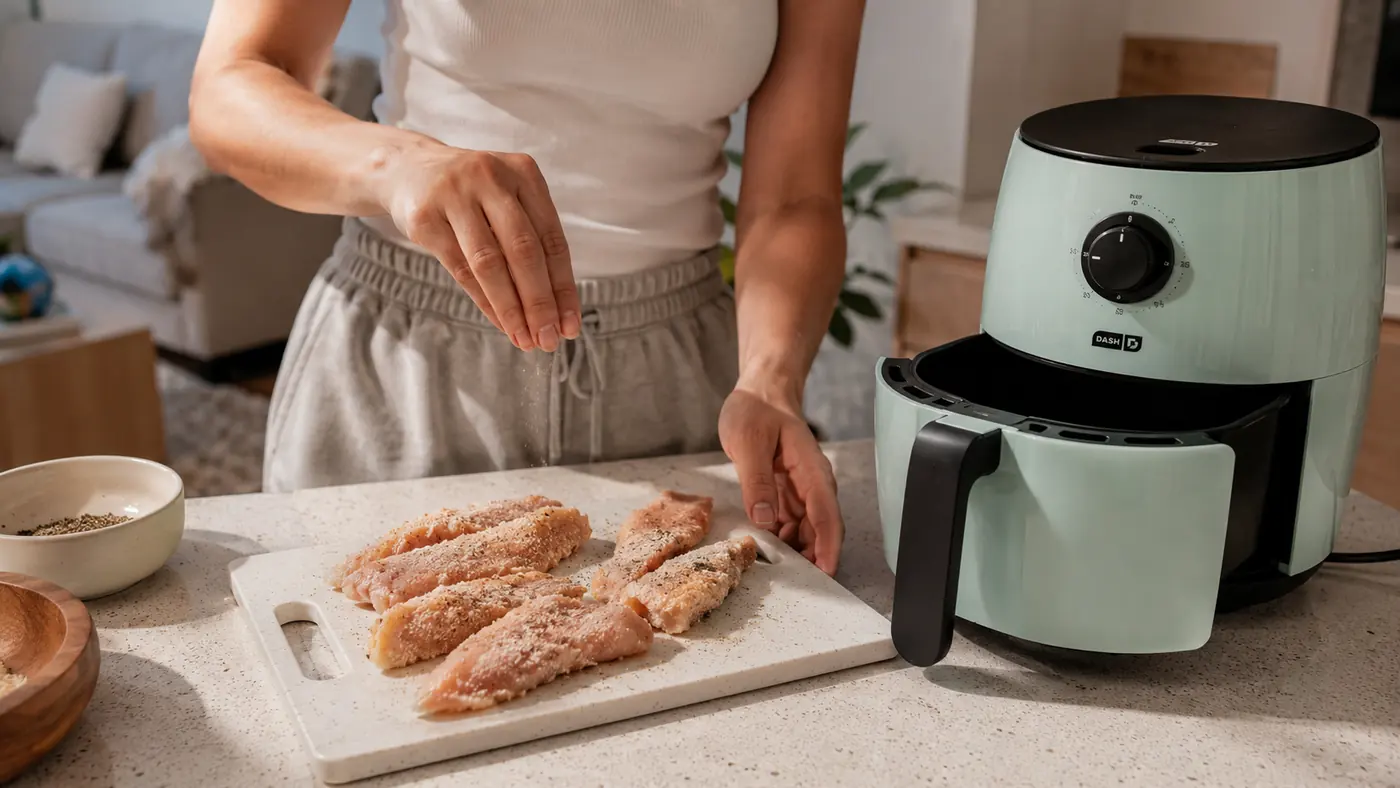
The single biggest time sink in weeknight cooking is waiting for something to thaw. My fix was rethinking what I keep in the freezer. Frozen chicken tenders, pre-portioned salmon fillets, and turkey burger patties all go straight from freezer to basket with the DASH Tasti-Crisp, no defrosting step required. That alone saves me the twenty to thirty minutes most recipes assume you have sitting around, which I usually don't.
I keep a rotating stock of three or four proteins that all cook well from frozen: chicken tenders, shrimp, salmon, and the occasional veggie burger for nights Danny wants something lighter. If a protein needs to be thawed first, I don't buy it for a fast weeknight meal. That's not a compromise, it's just a rule that keeps the whole system honest.
This also changed how I grocery shop. I used to buy whatever protein looked good and figure out the cooking method later, which meant I'd get home some nights and realize dinner needed an hour I didn't have. Now I check the package before it goes in the cart. If it says thaw before cooking, it's a weekend project, not a Tuesday dinner. That one filter has probably done more for how fast I eat on weeknights than any technique I use once the food is actually in the basket.
Step 2: Prep Your Sides While It Preheats
The Dash Air Fryer takes about three minutes to preheat, and I've stopped standing around waiting for that window to pass. Instead, I use it to chop whatever vegetable is going in next, usually broccoli florets, halved Brussels sprouts, or sliced sweet potato. My cutting board lives directly next to the outlet where the air fryer stays plugged in, so there's zero walking involved, just a turn of the body from board to basket.
This is the step people skip when they're new to fast cooking with an air fryer. They preheat, then stand there, then start prepping once it beeps. Reverse that order and you've already banked three free minutes toward dinner. In a kitchen as small as mine, that overlap is the difference between a twenty-minute meal and a thirty-minute one.
I keep my cutting board, a paring knife, and a small bowl for scraps stacked in the same spot every night, right next to the air fryer's outlet, so there's no searching a drawer while the clock is running. It's a tiny thing, but in a kitchen with three feet of counter, not having to reach across the space for a knife saves real seconds, and those seconds add up across a whole week of cooking this way.
Step 3: Load the Basket in a Single Layer, Not a Pile
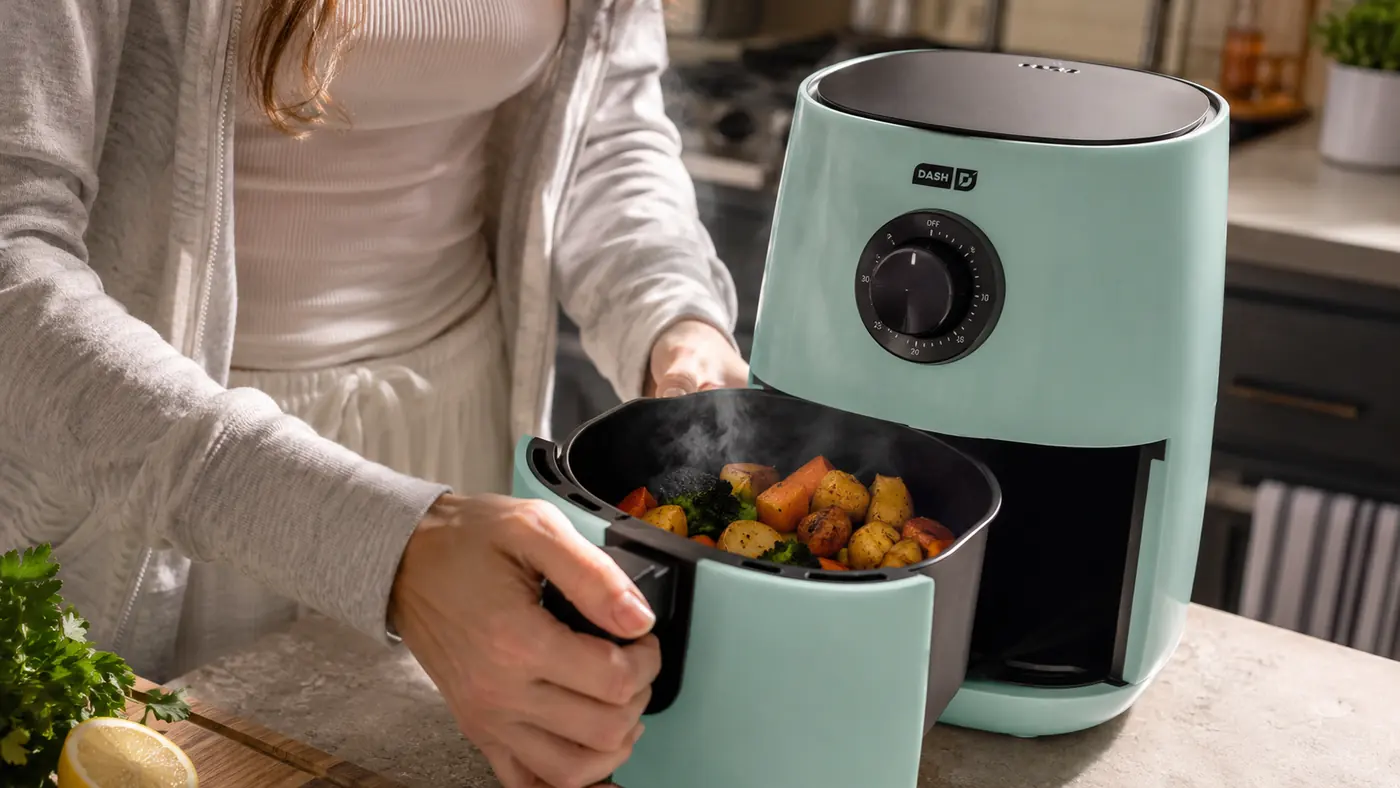
This is the step that took me the longest to learn, and it's the one that actually determines whether your meal comes out fast and evenly cooked or soggy and half-raw in the middle. The 2.6 quart basket on the DASH Tasti-Crisp is not huge, and the instinct to dump everything in at once to save a step backfires every time. Overcrowding blocks airflow, and blocked airflow means longer cook times and uneven results, which defeats the entire point of cooking fast.
My rule now is simple: if I can't see space between pieces of food, I'm cooking two smaller batches instead of one crowded one. It sounds slower on paper, but two quick batches that each cook evenly and finish on time beat one crowded batch that needs five extra minutes and still comes out uneven. For a household of one or two, which is most of what this appliance is built for, a single layer almost always fits what you actually need to eat in one sitting anyway.
Danny used to tease me about running two batches instead of one, saying it seemed like more work, not less. It isn't. Two batches at four minutes each in a basket where the food actually has room to crisp beats one nine or ten minute batch where half of it comes out pale and soft in the middle and needs to go back in anyway. Once he saw the timing side by side, the teasing stopped.
Step 4: Shake at the Halfway Mark, Every Time
I set a second, shorter timer on my phone that goes off halfway through the cook cycle, and when it does, I pull the basket and give it one firm shake. This takes about five seconds and it's the single easiest way to guarantee even browning without babysitting the whole cook. Before I built this habit in, I'd get food that was crisp on top and pale on the bottom, which meant an extra few minutes tacked on at the end to fix it, and extra minutes are exactly what this whole process is trying to avoid.
It's a small habit, but it compounds. Across a normal week where I'm using the air fryer four or five nights, skipping the shake step even once or twice adds up to real extra time spent re-checking food that should have already been done. Building it into muscle memory is what actually makes cooking fast meals with the Dash Air Fryer repeatable instead of a lucky one-off.
A typical Tuesday looks like this: chicken tenders go in first, I shake at the halfway mark, pull them, and immediately load the broccoli for a shorter second cycle while the chicken rests on a plate. Both the shake and the swap take under a minute combined, but skipping either one turns a clean twenty-minute dinner into something closer to thirty, with more standing around than I want on a weeknight.

Step 5: Plate While the Auto Shutoff Handles the Rest
The last few minutes of any cook cycle are dead time if you're just standing there watching. Instead, I use that window to grab plates, pour drinks, and set the table, which in my apartment is a small two-person table wedged next to the window. The auto shutoff on the Tasti-Crisp has never once failed to trigger at the end of a cycle in six months of nightly use, so I trust it enough to walk away from the kitchen entirely during that last stretch instead of hovering.
By the time the timer clicks off, the table's set, the protein and vegetables are both done because I staggered the batches by a couple of minutes, and I'm plating instead of still cooking. That's the whole system. Nothing about it requires a recipe app, a meal kit, or a second appliance taking up the last bit of counter I have left.
Do that math across a week and it's not a small difference. Saving fifteen to twenty minutes a night, four or five nights a week, works out to well over an hour of my evening back by Friday. That's not an hour I spend cooking something more elaborate either, most weeks. It's an hour I get to spend actually sitting down instead of standing at the counter, which was the entire reason I started paying attention to how I cook in the first place.
What Else Helps
A few small habits outside the five steps make the whole routine faster without adding any real effort. I keep a short list of go-to seasoning combinations taped inside my cabinet door, garlic powder and paprika for chicken, lemon pepper for salmon, so I'm never standing there deciding what to season something with while the clock is running. I also learned to trust smaller batches over bigger ones. It feels counterintuitive when you're hungry and want it all done at once, but two five-minute batches beat one nine-minute overcrowded batch nearly every time, both for speed and for how the food actually turns out. If you want the bigger-picture case for why a compact appliance like this one keeps winning over a full-size setup in a kitchen like mine, I laid that out more fully in 10 reasons compact air fryers beat full-size models.
Cleanup matters just as much as cook time when you're trying to move fast. I wipe the basket out with a damp sponge the moment I'm done plating, while it's still warm but not hot enough to burn my hands, and it takes maybe ninety seconds. Letting grease sit until after dinner turns a quick rinse into real scrubbing later, which is its own kind of time tax that has nothing to do with the appliance and everything to do with habit.
Fast cooking in a small kitchen isn't about a faster appliance, it's about removing every dead minute between steps.
If you want the full picture of how the DASH Tasti-Crisp has held up beyond just speed, including how the basket coating and dials have handled six months of nightly use, I covered that in detail in my long-term review. This guide is narrower on purpose. It's the exact process, not the full verdict, because on a Tuesday night with twenty minutes to spare, the process is the part that actually matters.
Ready to Build This Routine Into Your Own Kitchen
This five-step process only works because the appliance itself is fast to preheat, easy to load, and small enough to leave permanently plugged in. That's the whole reason the DASH Tasti-Crisp is the one I built it around.
Amazon Check Today's Price on Amazon →