

I bought the Magic Bullet Blender in January because my old stand blender finally died and I refused to replace it with anything that would eat more of my three feet of usable counter. Six months later, it is still sitting in the same spot next to my coffee maker, and I've used it more mornings than not. That's the honest baseline for this review. I'm not writing this after a weekend with it. I'm writing this after roughly 160 uses, a couple of smoothies that came out chunkier than I wanted, one attempt at almond butter that taught me the limits of a small motor, and enough Sunday morning routines that I now know exactly which cup to grab before I've had coffee.
This is a long-term use review, not a first-impressions post. I'm not going to walk you through the unboxing or what it felt like the first week, because that's not useful if you're trying to decide whether the Magic Bullet actually holds up in a small kitchen where every square inch of counter and every outlet matters. What I want to cover is what daily life with it looks like once the novelty wears off, whether the cups and gaskets survive real use, whether the base still runs the way it did in January, and whether I still reach for it on the mornings I'm too rushed to think about breakfast.
The Quick Verdict
Six months in, still my most-used prep appliance. Small footprint, consistent results for smoothies and sauces, and it earned a permanent spot on my counter instead of a shelf.
Amazon Check Today's Price →Still Blending Every Morning After 6 Months, Here's Why It Stuck Around
If you're deciding between a full-size blender and something that actually fits a small kitchen, the Magic Bullet has been the one appliance in my apartment that never migrated to the closet.
Amazon Check Today's Price on Amazon →How I've Actually Used It
My kitchen is a narrow galley with two outlets that both sit behind where my dish rack usually lives, so anything I buy has to earn its spot on the counter or it goes in a cabinet and never comes back out. The Magic Bullet base is small enough to tuck between the coffee maker and the wall without crowding the cutting board space I actually need, and the tall cups store standing up in the same footprint as a couple of water glasses. I measured my counter before I bought it, because I've made that mistake before with an appliance that ended up too wide to sit next to my knife block, and this one has never once felt like it was fighting for room.
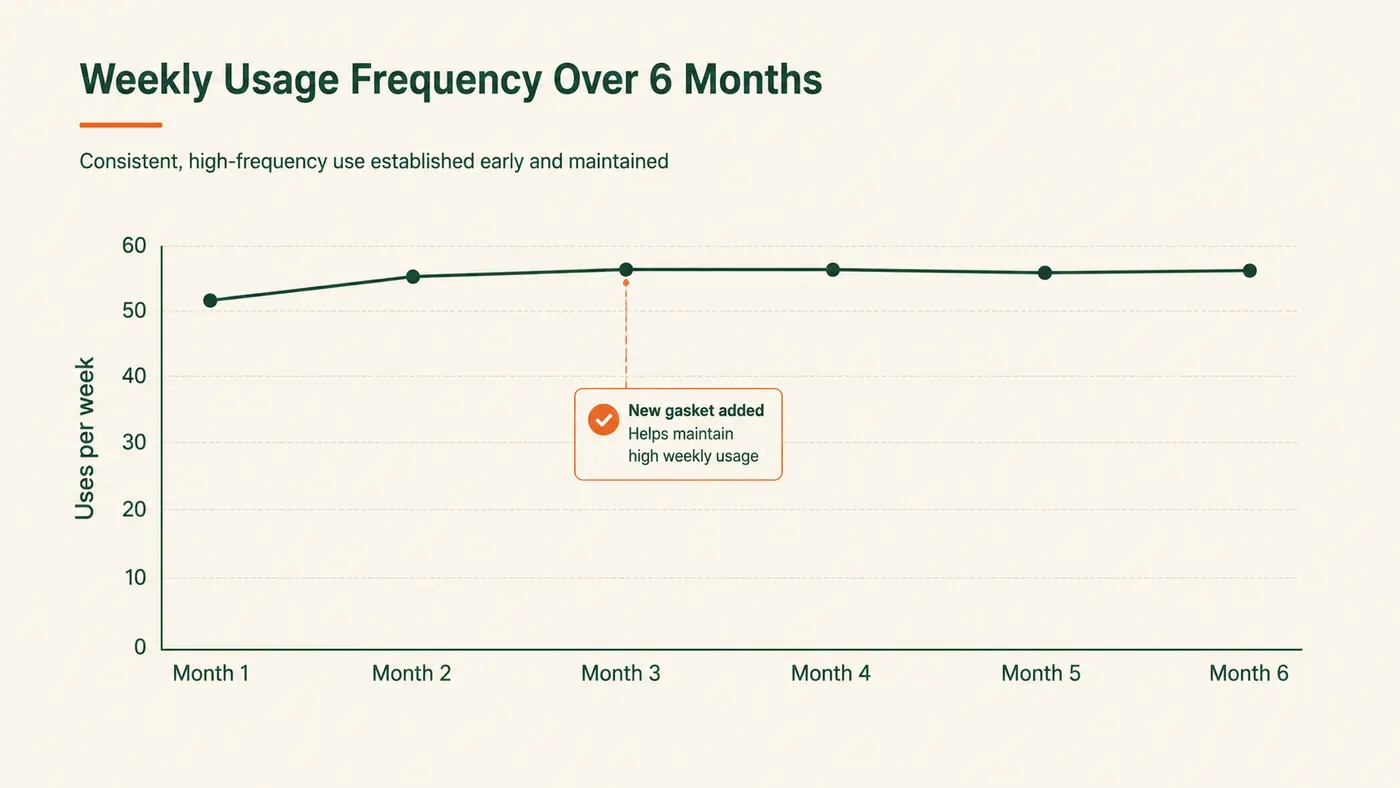
In an average week I use it five to six times. Weekday mornings are the bulk of it: a quick smoothie with frozen fruit and whatever I have in the fridge, blended straight into the to-go cup so I can screw the lid on and walk out the door. On weekends I use it for salad dressings, blended sauces, and chopping small batches of herbs or nuts when I don't want to drag out a full food processor for a job this size. It has never once felt like a novelty appliance I forgot about after the first month, which is more than I can say for the panini press that's currently living in a box under my bed. If you're comparing this against other personal blenders for a small kitchen, I put together a closer look at how it stacks up in Magic Bullet vs. NutriBullet for anyone weighing the two side by side.
The eleven-piece set that comes with the Magic Bullet Blender means I've had a lot of cup and lid combinations to rotate through, which turned out to matter more than I expected. I keep two of the tall cups in daily rotation, one always drying on the rack while the other is in use, and that alone has kept the whole system running without me needing to wash the same cup twice in one morning.
The Daily Routine, Six Months In
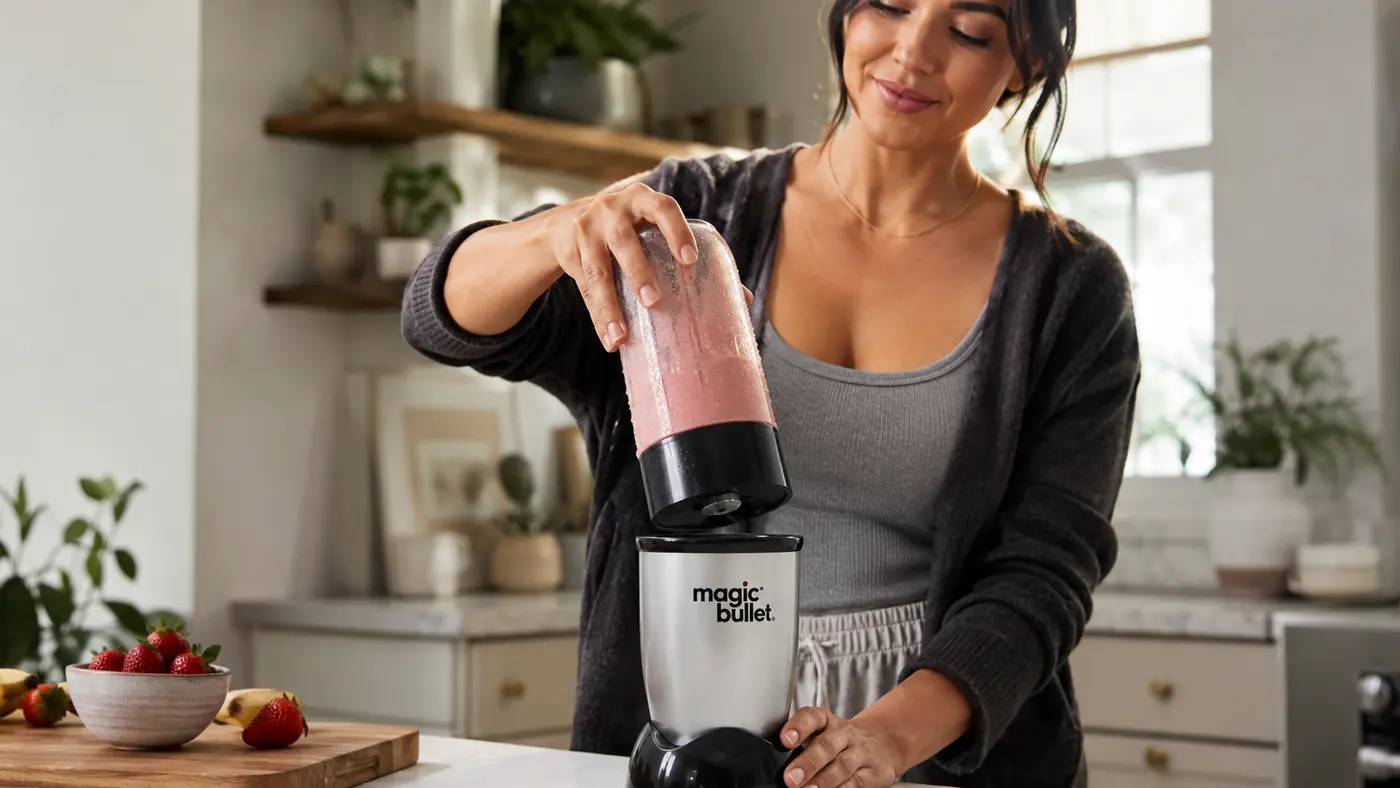
Here's what a typical weekday morning looks like. I get up, start the coffee maker, and while that's running I throw frozen fruit, a splash of milk, and a scoop of oats into one of the tall Magic Bullet cups. Twist it onto the base, hold the cup down, and it's blended smooth in under thirty seconds most mornings. The whole base sits on my counter permanently now, plugged into the outlet closest to the coffee maker, and I no longer store it between uses. Early on I tried tucking it into a lower cabinet after every smoothie to keep the counter clear, and within about two weeks I gave that up because pulling it out and setting it up again every morning was the kind of friction that makes you stop using something entirely.
There's no dial, no button, no digital display. You press the cup down onto the base and the blades run, you let go and they stop. Six months of daily use hasn't changed that at all, which matters more than it sounds like it should. I've owned kitchen gadgets with buttons and screens that started sticking or glitching within a few months, and there's something to be said for a design with almost nothing that can fail mechanically. The motor still sounds the same as it did in January, and I've never once had it stall on frozen fruit unless I overfilled the cup past the max line, which is on me, not the blender.
Cleaning and Maintenance, Six Months In
This is the part that usually gets skipped in reviews, and it's the part that actually determines whether an appliance survives in a small kitchen. My cleaning routine settled into something simple after the first month: rinse the cup right after I pour out the smoothie, add a drop of soap and a little water, twist the blade back on, and run the base for a few seconds to self-clean before a final rinse. It takes maybe two minutes total, which is short enough that I've never once been tempted to leave a sticky cup in the sink overnight.
The base itself has needed almost nothing beyond an occasional wipe-down, since liquid stays contained inside the cup rather than splashing out the way an open blender pitcher sometimes does. The one maintenance note worth flagging came around month three, when I noticed the rubber gasket on my most-used cup lid had started to lose a little bit of its grip, letting a small amount of smoothie seep out around the seal if I overfilled the cup. Rotating in a second gasket from the eleven-piece set solved it completely, and I've since learned to just replace that small rubber ring every few months rather than waiting for it to fail.
What Wore In vs. What Wore Out
Nothing has broken. That's the short version. The motor base still runs at the same speed and sound level it did on day one, and the power cord is still flexible with no stress cracks near the plug. The cross blade has stayed sharp enough that frozen fruit still purees smoothly rather than turning into a chunky slush, which was my biggest worry going in given how often I've run it. The only cosmetic change is a few faint scuff marks on the base where it sits against my spice rack, which I only notice because I know to look for them.
What did change is my own technique, which improved the results more than anything about the unit itself. In the first month I was tossing everything in at once and getting uneven blends with chunks of frozen fruit still floating in liquid at the top. Once I started layering softer ingredients on the bottom and adding liquid before the frozen fruit, results got noticeably smoother and more consistent. That's less a review of the Magic Bullet and more a note for anyone buying their first one: the learning curve is real but short, maybe three or four blends before you figure out your own order of operations.
How It's Held Up Against What I Used to Own
Before this, I ran a full-size stand blender that I inherited from a roommate, and the pitcher alone took up nearly a third of my counter when it wasn't in use. Switching to something this compact felt like a downgrade on paper, and for the first couple of weeks I genuinely missed being able to blend a full pitcher of soup in one go. Six months later, I don't miss it. I've adjusted how I cook rather than missed the capacity, and the amount of counter space I got back has changed how the rest of my kitchen functions, since I finally have room to actually set down a cutting board next to the stove instead of balancing it on top of the microwave.
If you're weighing whether a compact personal blender like this one can really replace a bigger setup, I wrote a more general breakdown of the tradeoffs in 10 reasons personal blenders beat full-size blenders for small kitchens specifically. The short version from six months of living with the Magic Bullet: for a household of one or two, the smaller footprint has been worth more to me than the extra capacity ever was.
What I Liked
- Still my daily-use appliance six months in, no drop-off in how often I reach for it
- Motor and cross blade have stayed reliable with no stalling or dulling after six months of use
- Cups double as to-go containers, which has genuinely changed my morning routine
- Compact enough to live permanently on a narrow counter without crowding prep space
- Self-cleans in under two minutes with just soap, water, and a quick run of the base
Where It Falls Short
- Cup lid gaskets wear over time and need occasional rotation from the included set
- Small cup size means multiple batches for anything beyond one or two servings
- No speed settings, it's just on when the cup is pressed down and off when it's lifted
- Struggles with denser blends like nut butters, which need more patience than liquids and frozen fruit
Who This Has Actually Worked For
This has been the right appliance for someone cooking for one or two people in a kitchen where counter space is the real constraint, not blending capacity. If you're regularly making a full pitcher of anything for a family of four, the cup sizes here are going to mean multiple batches every time, and that adds up on a rushed morning. But for my apartment, where the alternative was giving up counter space I don't have to something bigger, the smaller capacity has been the entire point rather than a compromise.
It's also been the right fit for the way I actually cook, which is mostly smoothies, quick sauces, and small-batch dressings rather than heavy-duty blending. If your use case is going to be mostly frozen fruit blends, salad dressings, and chopping small amounts of herbs or nuts, the Magic Bullet has handled every one of those categories well and consistently over six months. If you're planning to crush ice constantly or blend dense, thick mixtures every day, that's outside what I've tested it for, since that's just not how I use it.
The real test of a small-kitchen appliance isn't the first week, it's whether it's still plugged in six months later instead of buried in a cabinet.
Who This Is For
If you're in an apartment, a condo, a dorm, or anywhere with limited counter and cabinet space, and you're blending for one or two people most days, this has been a reliable daily appliance for me. It's light enough to move if you need the outlet for something else, and small enough that it doesn't dominate a narrow counter the way some full-size blenders do. If your main constraint is space rather than batch size, six months of consistent use suggests this is a genuinely durable pick, not just a good first impression.
Who Should Skip It
If you're blending for a bigger household, or if you regularly want a full pitcher's worth of anything in a single run, the cup sizes here are going to feel small fast. I'd also say skip it if you're going to lean heavily on it for dense, heavy blending tasks, since the small motor is built for smoothies and quick sauces rather than constant heavy-duty work. And if counter space genuinely isn't a constraint for you, a full-size blender might serve you better long-term simply because you won't be doing batches as often.
Six Months Later, Still the First Thing I Reach for in the Morning
If your kitchen has the same space problem mine does, the Magic Bullet is the one small-kitchen appliance in my apartment that's actually earned its permanent spot on the counter.
Amazon Check Today's Price on Amazon →