
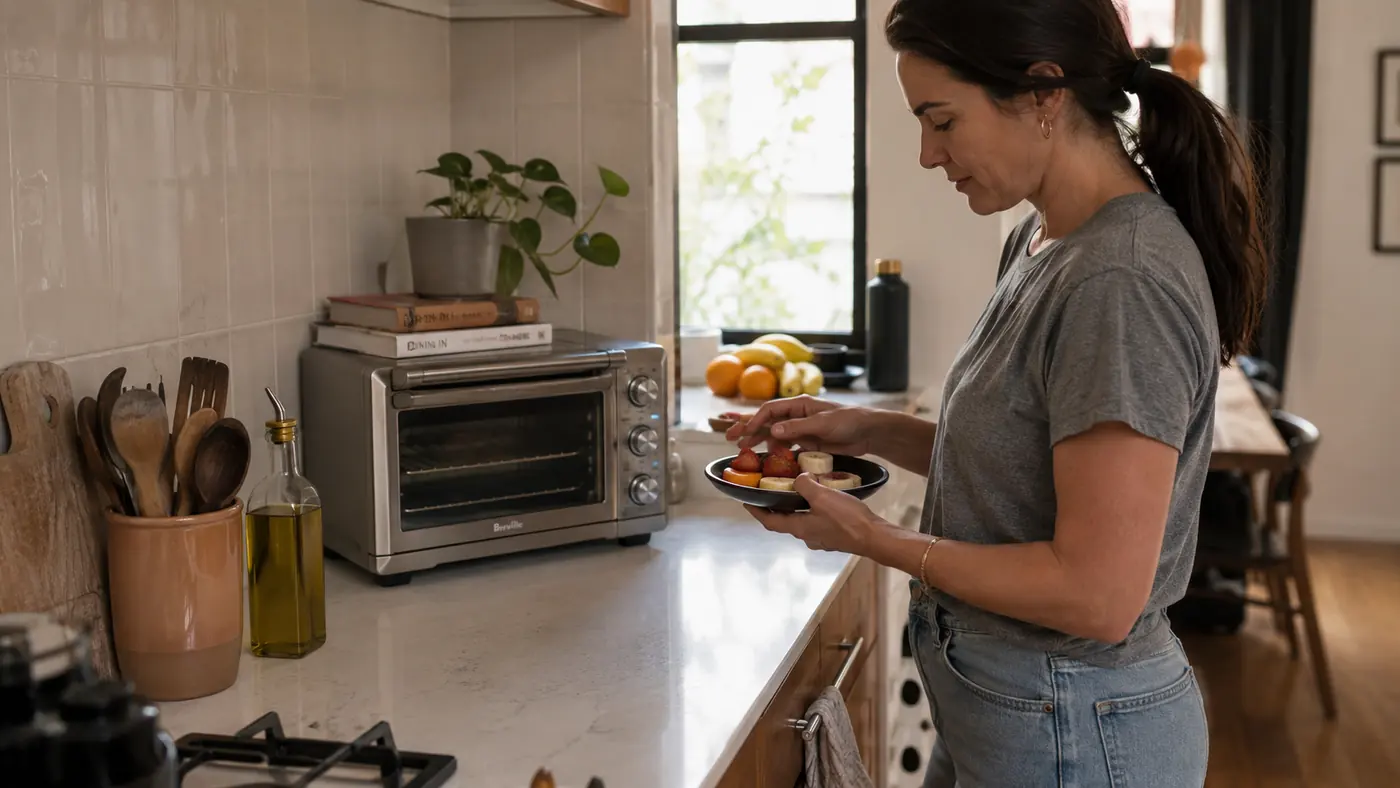
If you only have about three feet of usable counter and two outlets like I do in my apartment, the short answer is that the DASH Mini Toaster Oven is the one built for that scale, and the BLACK+DECKER toaster oven is the more capable machine if you have a few extra inches to spare and don't mind giving them up permanently. I've had both sitting on my counter at the same time for the better part of a month, which is not something I'd normally do in a galley kitchen this size, but I wanted to see the size difference with my own eyes instead of just comparing spec sheets.
My old toaster oven died last year and I replaced it with the DASH Mini Toaster Oven specifically because I measured my counter first and ruled out anything bigger. Before I settled on it, I borrowed a friend's BLACK+DECKER toaster oven for a couple of weeks to see what I'd be giving up by going smaller. What follows is the honest version of that comparison, not a spec sheet with a winner declared in the first paragraph. Both are genuinely good appliances. The question that actually matters for a small kitchen is which tradeoffs you're willing to live with every single day.
| Spec | DASH Mini Toaster Oven | BLACK+DECKER Toaster Oven |
|---|---|---|
| Countertop Footprint | Compact box, roughly 12.5 by 10 by 8 inches, fits on a narrow strip of counter without crowding a cutting board | Larger four-slice footprint, closer to 16 by 11 by 9 inches, needs a dedicated stretch of counter to sit flat |
| Interior Capacity | Fits 2 slices of bread or a personal 9-inch pizza, sized for cooking for one or two | Fits 4 slices of bread or a 9 by 13 inch pan, sized for cooking for a family in one round |
| Wattage | Around 1200 watts, enough for toast, reheats, and small bakes without overloading a shared outlet | Around 1500 watts, more power for faster preheat but a heavier draw on the same circuit |
| Temperature Range | Roughly 150 to 450 degrees Fahrenheit, covers toast through roasting and baking | Similar 150 to 450 degree range, plus a dedicated broil setting for browning tops |
| Controls | Two simple mechanical dials, temperature and a 30-minute timer with auto shutoff | Dial controls plus a separate toast-shade selector and function dial for bake, toast, and broil |
| Weight | About 8 pounds, light enough to lift and store on a shelf between uses | About 11 to 12 pounds, meant to stay put permanently rather than get moved around |
| What Fits Inside | Small toast, a bagel half, a single chicken breast, a mug of leftovers, one small tray of vegetables | A full sheet of cookies, a small casserole dish, four slices of toast at once, a whole small chicken |
| Outlet Draw | Plays well sharing one of my two outlets with a kettle or coffee maker without tripping anything | Higher wattage means it prefers its own outlet if you're running another appliance at the same time |
Where the DASH Mini Toaster Oven Wins
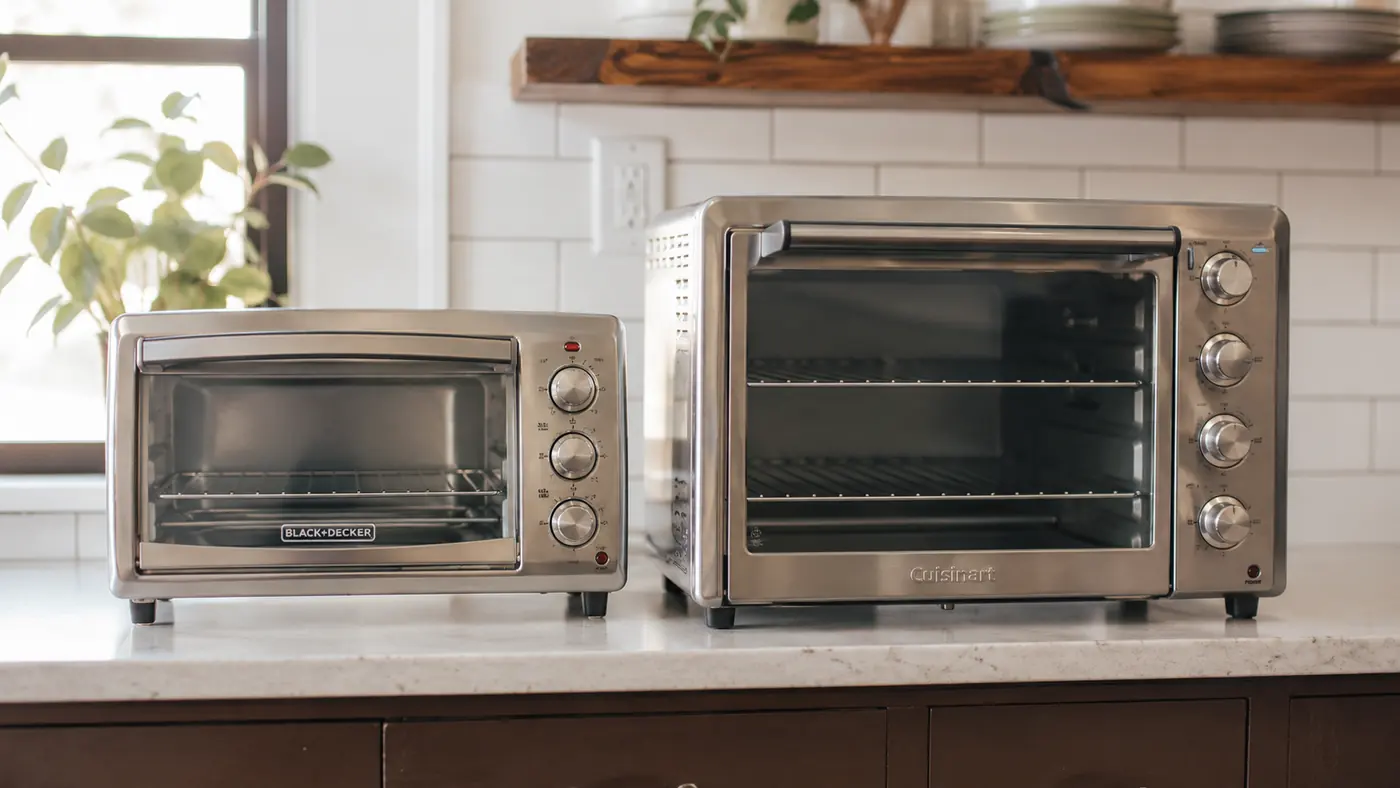
The DASH wins the second you actually measure your counter instead of eyeballing it. When I set the BLACK+DECKER oven down in the spot where my old one used to sit, it stuck out nearly two inches past the edge of my counter on one side, close enough to the stove that I couldn't set a cutting board down next to it anymore. The DASH Mini Toaster Oven sits fully inside that footprint with room to spare, which sounds like a small detail until you're the one chopping vegetables on the twelve inches of counter that's left over.
It also wins on weight, which matters more than people expect in a small kitchen. At around 8 pounds, I can actually pick the DASH up with one hand and move it to a shelf if I need the counter space for something else, like the one weekend a year I roll out actual pie dough. The BLACK+DECKER, at closer to 11 or 12 pounds, is not something I'd want to lift and stash regularly. It's built to live in one spot permanently, which is fine if you have that spot to give it, but it's not a machine you casually relocate.
There's a real cost-of-real-estate argument here too. My kitchen has two outlets and no room for a toaster oven that also wants its own dedicated outlet. The DASH pulls about 1200 watts, which has shared an outlet with my electric kettle without ever tripping a breaker. When I ran the borrowed BLACK+DECKER at 1500 watts alongside the kettle one morning, the circuit felt noticeably more loaded, and I got in the habit of unplugging one before running the other. In an apartment with old wiring and two outlets total, that's not a small inconvenience.
It also wins on how quickly it becomes background furniture instead of a project. Danny and I unpacked the DASH, set it in its spot, and never had to reconsider the kitchen layout around it. The BLACK+DECKER, during its two weeks here, forced a small reshuffle every time I wanted to use my cutting board, because there wasn't room for both to be out at once. That kind of daily friction is exactly what makes an appliance stop getting used.
Where the BLACK+DECKER Toaster Oven Wins
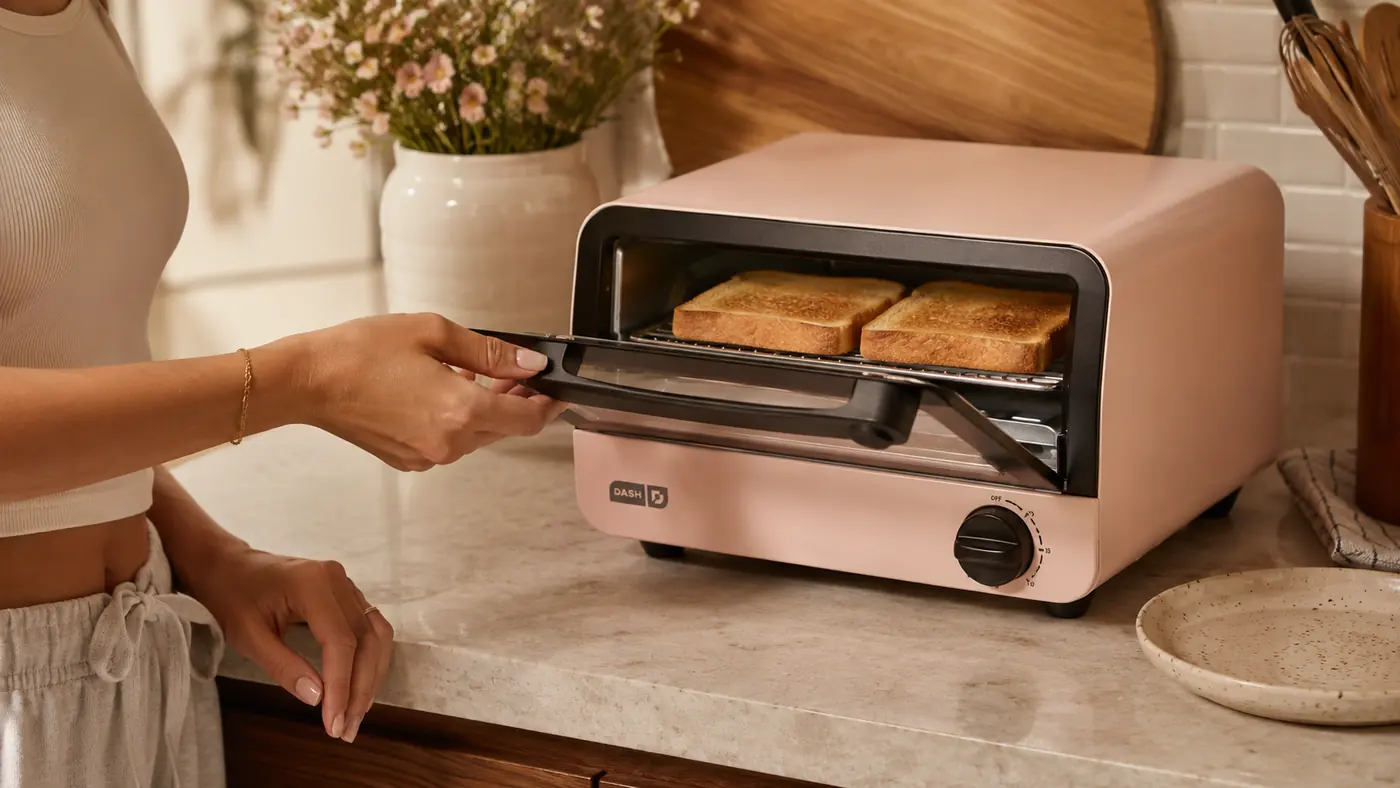
I want to be fair here, because the BLACK+DECKER is not a worse appliance, it's a bigger one built for a different kitchen. If you're cooking for more than two people, or you regularly want to bake a full tray of cookies or reheat a casserole dish instead of a single plate, the extra capacity is the whole point. Four slices of toast at once instead of two matters on a Sunday morning with houseguests. A 9 by 13 inch pan fitting inside the oven at all is something the DASH simply cannot do, and no amount of clever small-kitchen technique changes that.
The dedicated broil setting is also a genuine advantage. When I had the BLACK+DECKER on my counter, I used the broil function to finish melting cheese on top of a baked dish in a way the DASH's simpler dial setup doesn't replicate quite as precisely. If browning and broiling are a regular part of how you cook, that's a real feature gap worth knowing about before you buy the smaller option.
It's also the more forgiving choice if you cook in batches rather than one plate at a time. When my sister visited with her two kids for a weekend, I genuinely wished I had the BLACK+DECKER back on the counter so I could toast a full round of bread instead of running my smaller oven twice. That's a real limitation of going compact, and I won't pretend otherwise just because the DASH is the one I ultimately kept.
The DASH never made me rethink my counter. The BLACK+DECKER made me rethink it every single time I wanted to use it.
If your counter is the real constraint, not your appetite, this is the one to buy
The DASH Mini Toaster Oven fits where a full four-slice model won't, shares an outlet without tripping anything, and still handles toast, reheats, and small bakes every single day.
Amazon Check Today's Price on Amazon →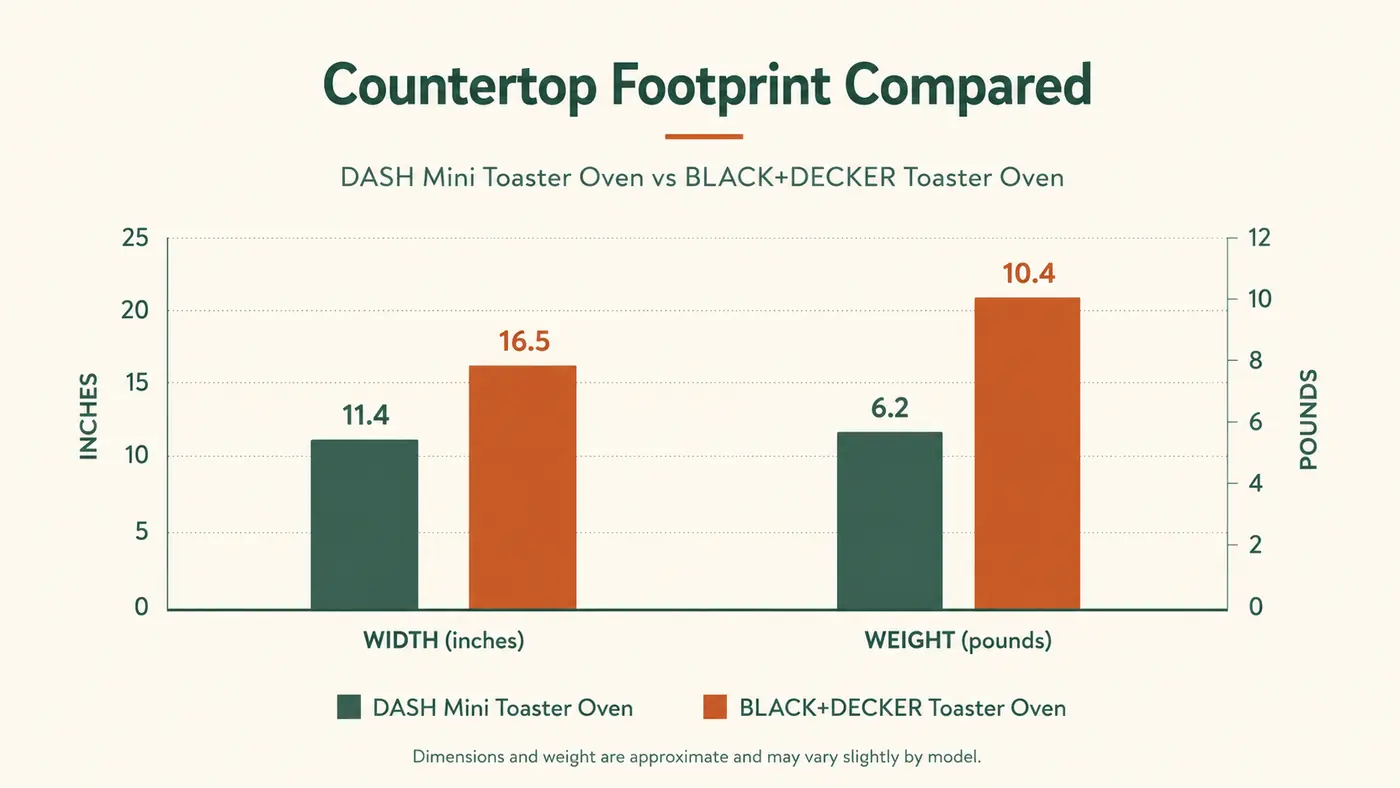
What Actually Fits Inside Each One
Spec sheets say 2 slices versus 4 slices, but that number doesn't tell you what a real weeknight looks like. In the DASH, I regularly fit two slices of sandwich bread side by side, a bagel half toasted cut-side up, one boneless chicken thigh reheated from the fridge, a small ramekin of baked eggs, or a dinner plate's worth of roasted broccoli spread thin on the included tray. What doesn't fit is anything wider than a standard dinner plate or taller than about four inches, so a whole small chicken or a deep casserole dish is out.
The BLACK+DECKER's extra room genuinely opened up meals I couldn't do in the DASH. During its two weeks here, I baked a 9 by 13 inch pan of ziti for Danny and me with leftovers for two more nights, something the smaller oven's interior can't accommodate. I also toasted a full four-slice round of bread for weekend breakfast without running two batches. But that same extra depth meant it never disappeared into the kitchen the way the DASH does. It always looked and felt like an appliance taking up space, because it is one, on purpose, for a bigger household than mine.
How Each One Actually Performs Day to Day
Toast comes out close to identical between the two, which surprised me a little. Both browned bread evenly across two full weeks of side-by-side mornings, no cold spots, no burnt edges on one and pale toast on the other. Where they diverge is reheating and small bakes. I use my DASH almost every night to reheat leftovers or roast a small tray of vegetables for one, and its smaller cavity actually heats up faster for those jobs since there's less empty air for it to warm. The BLACK+DECKER takes a bit longer to preheat for a small portion simply because there's more interior volume to bring up to temperature, even with its higher wattage working in its favor.
Cleaning was close, though the DASH edges it out because there's less surface area to wipe down and the crumb tray slides out easily after a night of toast. The BLACK+DECKER's crumb tray is roomier, which means it goes longer between cleanings if you're not toasting daily, but there's more interior glass and rack to deal with when it does need attention.
What a Month of Living With Both Actually Taught Me
I expected the size difference to be the whole story, and it mostly was, but the outlet situation ended up mattering just as much in practice. My kitchen has two outlets total, one behind where the dish rack lives and one closer to the stove, and I run my electric kettle out of the same one I run a toaster oven from most mornings. With the DASH, that's a non-issue. With the BLACK+DECKER pulling more power, I found myself thinking about sequencing, kettle first, then toaster oven, rather than just doing both at once the way I normally would. That's a small thing on paper and a genuinely annoying habit to build in real life.
Heat output was the other real difference. The BLACK+DECKER threw noticeably more ambient warmth into the kitchen during a longer bake, which matters in summer with the windows closed, and both units need a few inches of open air behind the vents that's simply easier to find on a crowded counter with the smaller footprint. By the end of the month, the decision had basically made itself. The DASH went back into permanent rotation, and the BLACK+DECKER went back to my friend, not because it's a lesser appliance, but because it was never going to fit the kitchen I actually cook in.
Who Should Buy Which
If you're cooking for one or two people in an apartment, a dorm, an RV, or any kitchen where counter space and outlet count are the real limiting factor, the DASH Mini Toaster Oven is the one I'd point you toward. It fits the footprint most small kitchens actually have, it's light enough to move if you need the space back, and it handles the daily rotation of toast, reheats, and small roasted sides without asking for more real estate than you can give it. For anyone weighing this exact decision, I've also written up a longer look at what six months of daily use with this specific model actually looks like in my long-term DASH Mini Toaster Oven review, and a more unfiltered rundown of its quirks in my honest review of the DASH Mini Toaster Oven.
If you're feeding a family of three or more on a regular basis, or you want a full sheet of cookies and a broil setting on the same appliance, the math changes. The BLACK+DECKER toaster oven earns its larger footprint in that kitchen, and I wouldn't talk anyone with a bigger household or more counter to spare out of it. Its interior genuinely does jobs the DASH can't touch, and a broil setting isn't a gimmick if you actually use it every week.
But for the specific problem most readers here are trying to solve, fitting a real toaster oven onto a genuinely small amount of counter without giving up the outlet you also need for a kettle or coffee maker, the DASH Mini Toaster Oven is the one that's actually made the cut on my own counter for over a year now. It's the appliance that disappeared into my routine instead of demanding I redesign my kitchen around it, and for a household of one or two, that's worth more than the extra capacity ever was.
Built for the counter you actually have, not the one you wish you had
See today's price and current availability on the toaster oven that's been living on my three feet of counter without ever crowding out anything else.
Amazon Check Today's Price on Amazon →