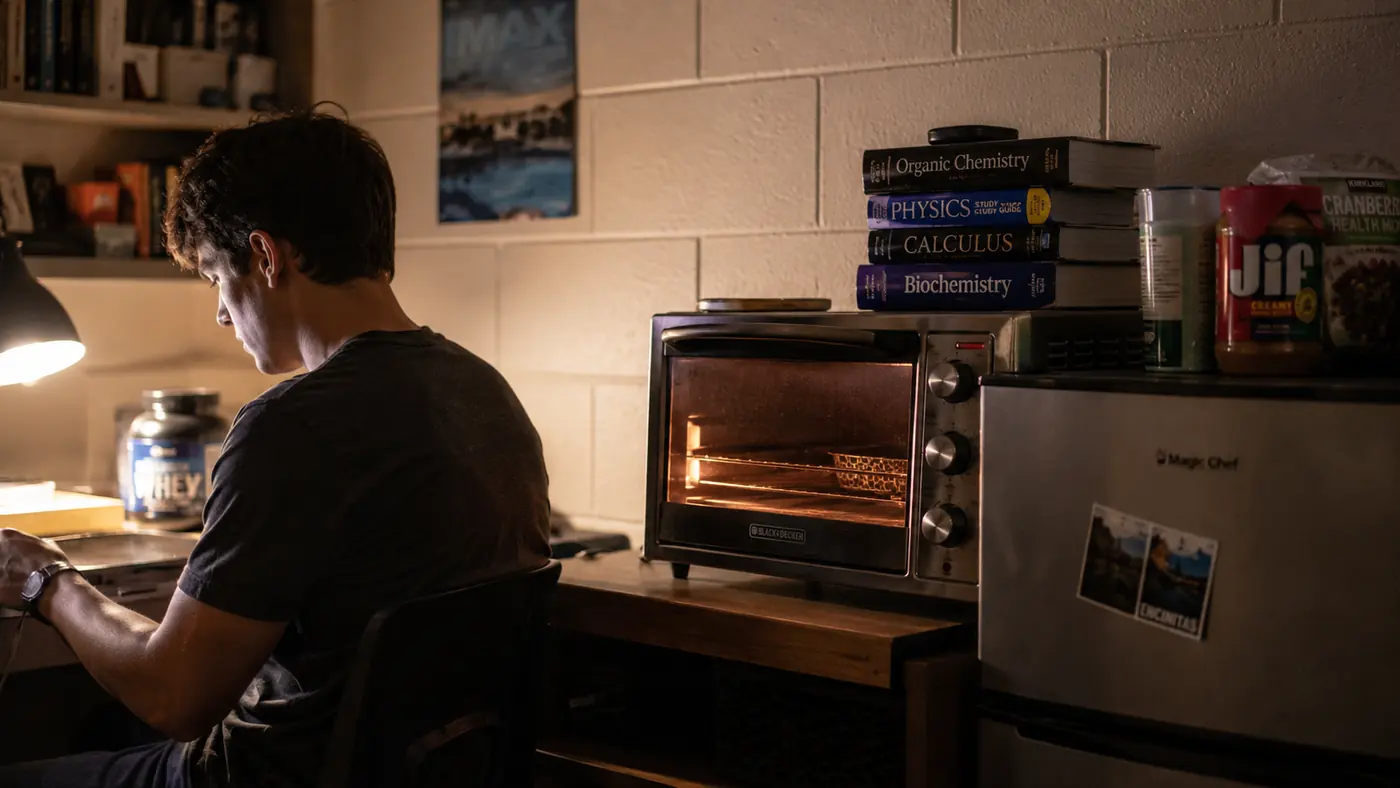
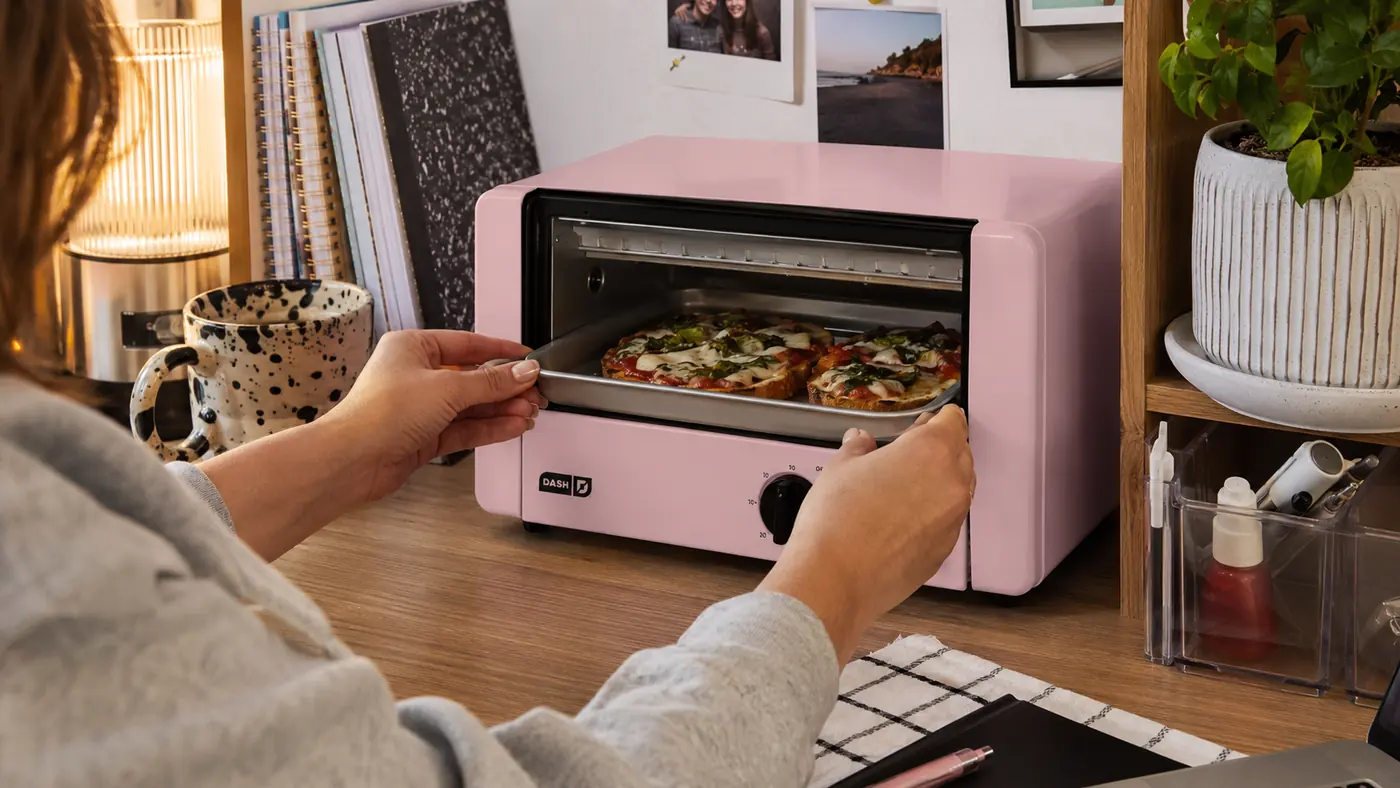
My cousin Mia moved into her dorm last August with a mini fridge, a laptop, and a housing handbook that banned hot plates, toasters with open coils, and anything with an exposed heating element. What it didn't ban was an enclosed countertop oven, which is exactly why I drove up with a DASH Mini Toaster Oven in the back seat instead of letting her live off cereal and the vending machine down the hall. She had about a foot and a half of desk space, two outlets shared with a lamp and a phone charger, and zero interest in cooking anything that required a real kitchen. That's the actual starting point for this guide. If you or someone you're helping move in has a similar setup, here's exactly how we figured out how to cook dorm meals with a toaster oven that's small enough for a dorm desk but still does real cooking, not just toast.
I want to be specific here because most dorm cooking advice online is vague in a way that doesn't actually help you. It says things like "check your rules" without telling you what to look for, or "pick something compact" without telling you what compact actually needs to fit next to. So this is the walkthrough I gave Mia, step by step, from reading the housing handbook to plating an actual dinner on a desk that used to hold nothing but a laptop stand. Every step below assumes you're working with genuinely limited space, limited outlets, and no real kitchen sink, because that's the situation the DASH Mini Toaster Oven is actually built for.
The One Appliance That Got Past the Hot Plate Ban
If you're setting up a dorm or a tiny studio kitchen and the handbook rules out anything with open coils, an enclosed toaster oven like this one is usually the workaround. Here's the exact model we used.
Amazon Check Today's Price on Amazon →Step 1: Read Your Housing Handbook and Check the Outlet's Real Wattage Limit
Before we bought anything, I made Mia pull up her housing handbook and read the appliance section out loud. Most schools ban open-coil hot plates, deep fryers, and anything without an automatic shutoff, but they allow enclosed countertop ovens under a certain wattage, usually somewhere around 1,000 to 1,500 watts. The DASH Mini Toaster Oven falls comfortably in that range, which is the whole reason it cleared her building's rules when a hot plate wouldn't have. If you're doing this for your own dorm move-in, don't guess. Call your resident advisor or check the housing website directly, because getting flagged during a room inspection means losing the appliance entirely, not just a warning.
The second thing I checked was the outlet itself, not just the appliance. Dorm rooms are usually wired on shared circuits with several rooms on the same breaker, and a toaster oven pulling close to its max wattage at the same time as a mini fridge, a space heater, or a hair dryer on that circuit is the fastest way to trip a breaker at 11pm on a weeknight. We plugged the DASH Mini Toaster Oven directly into the wall outlet rather than a power strip, since power strips are rated for lower continuous loads than a wall outlet and heating appliances are exactly the kind of thing that overloads them. If you only have power strips available, check the wattage rating printed on the strip itself before you plug in anything that heats.
Step 2: Give It Real Clearance From Walls, Shelves, and Fabric
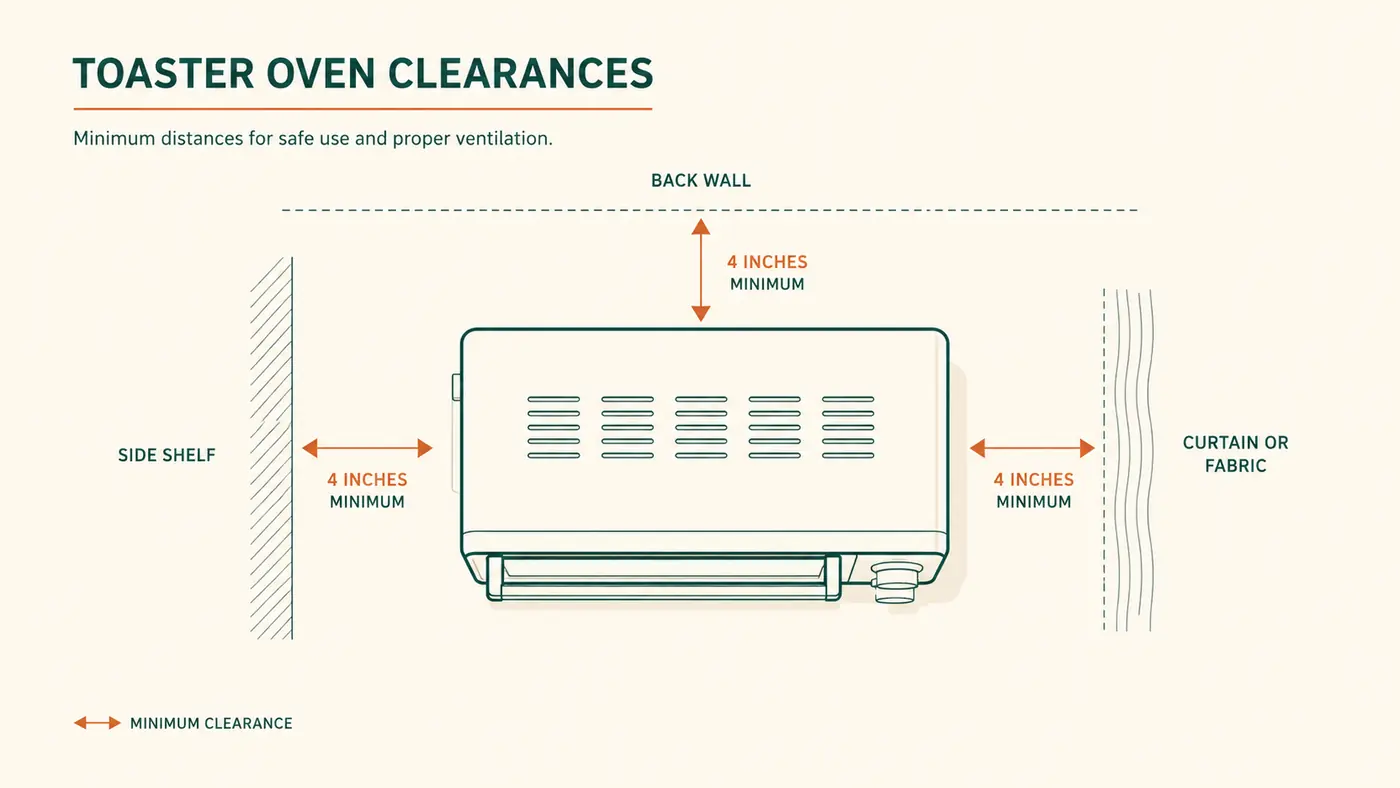
This is the step people skip and the one that actually matters most for safety in a dorm room. A toaster oven vents hot air out the back and sides while it's running, and dorm desks are usually built with a shelf or a loft bed frame directly above them. We measured out roughly six inches of clearance behind the DASH Mini Toaster Oven and at least four inches on each side, and we made sure there was nothing flammable directly above it, no curtains, no paper, no stacked notebooks. Mia's desk had a shelf about a foot above the surface, which was enough clearance once we moved a stack of binders that had been sitting right above where the oven now lives.
We also picked the spot farthest from her bed and closet, not because the oven runs hot on the outside, but because a small accidental spill or a forgotten tray is a much smaller problem on a desk than it is a few feet from bedding. If your dorm desk backs up against a wall shared with a neighbor's room, that's fine, drywall doesn't need special clearance, but anything wood veneer or laminate that sits directly behind the vents should have that same four to six inch gap. It's a five-minute check before you plug anything in, and it's the difference between a toaster oven that's genuinely safe in a tiny room and one that isn't.
Step 3: Get Pans and Trays That Actually Fit Inside a Mini Toaster Oven
A mini toaster oven's interior is a lot smaller than a standard toaster oven, and a lot of dorm shopping guides get this wrong by recommending pans sized for a full countertop oven. The DASH Mini Toaster Oven came with its own small tray and rack, which is what Mia uses for most meals, but we also picked up a quarter sheet pan and a couple of small oven-safe ramekins that we confirmed would fit before buying anything else. If you're shopping separately, measure the interior rack width and depth first, not the outside dimensions of the appliance, since the outer shell is always bigger than the usable cooking space inside.
One thing I told Mia early on: skip anything with a plastic handle or plastic parts, since those don't belong anywhere near the heating element even briefly. Metal trays, oven-safe glass, and small foil pans all work fine. Foil pans specifically have been useful for her because they're disposable, which solves a real problem in a shared bathroom sink situation, more on that in step five. For now, the short version is that a couple of small metal or glass dishes that actually fit the interior rack will cover almost everything you'd want to cook in a dorm room.
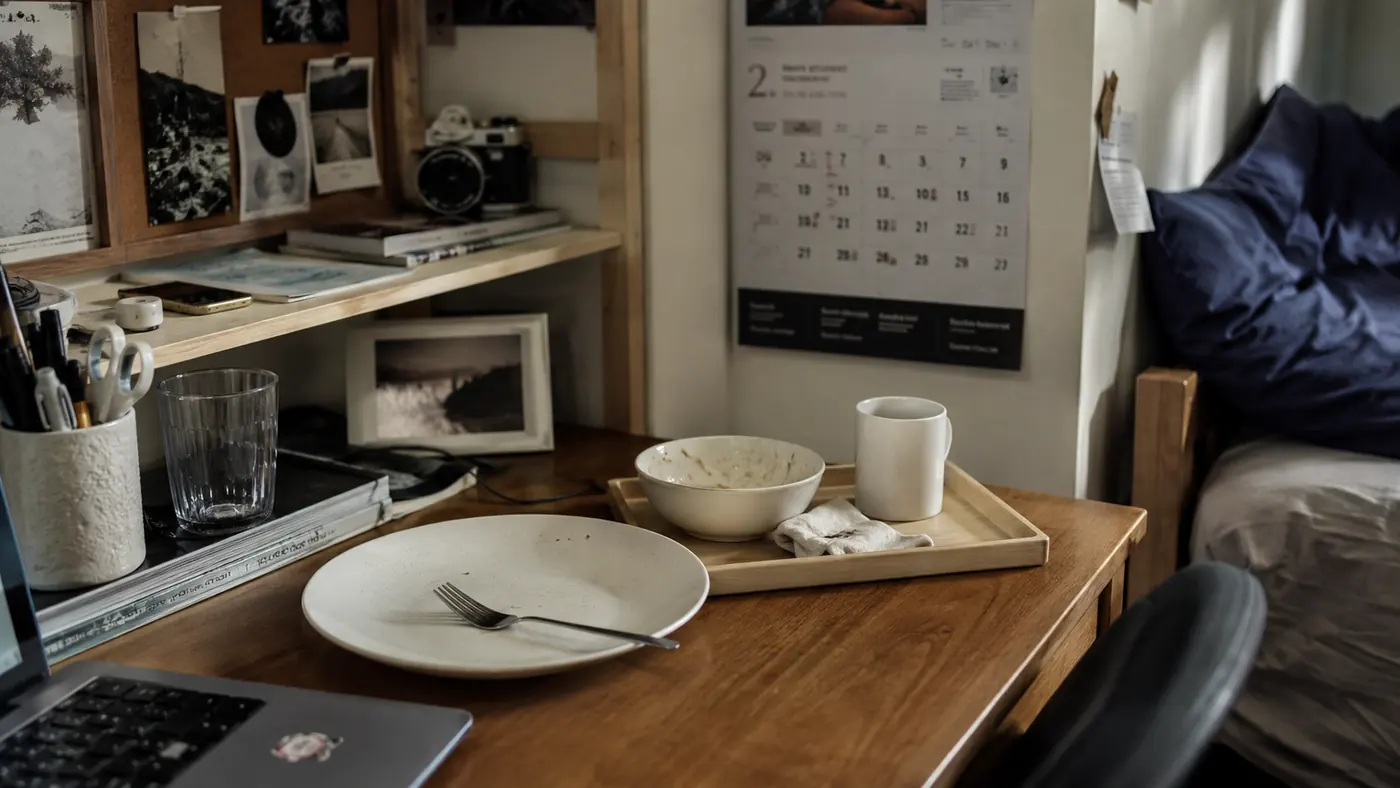
Step 4: Build a Rotation of Meals That Actually Work in a Toaster Oven
Once the DASH Mini Toaster Oven was set up and cleared for safety, the real question was what Mia would actually cook in it on a Tuesday night between classes. We built a rotation of about six meals that don't require a stovetop, a real oven, or more than one pan. Frozen chicken tenders and tater tots on the included tray became her go-to for a fast dinner. Personal pizzas, the kind sized for one, fit perfectly and come out with a crisper crust than a microwave ever gives you. Quesadillas made with a folded tortilla and shredded cheese take about eight minutes and don't need any oil. Baked sweet potatoes, pierced a few times and roasted whole, became her lazy Sunday meal because she could start one before a shower and have it done after.
For mornings, she reheats leftover rice or toasts a bagel using the toast setting, and on days she has a little more time, she'll do a small tray of roasted vegetables from the campus dining hall's to-go bar to eat alongside whatever protein she's cooking. None of these are complicated recipes. That's the point. Every meal in her rotation uses one tray, one appliance, and no more than fifteen minutes of hands-on time, because that's what actually gets used in a dorm room, not an ambitious recipe she'll try once and abandon. If you want a broader case for why a compact appliance like this one beats hauling a full-size oven's worth of gear into a small space, I laid out the tradeoffs in more detail in 10 reasons mini toaster ovens beat full-size ovens for exactly this kind of setup.
Step 5: Clean It Without Access to a Real Kitchen Sink
This was the part Mia was most worried about, because her dorm floor has a shared bathroom sink and nothing resembling a real kitchen. What actually worked was simpler than she expected. The tray and rack come out and get wiped down with a damp paper towel or a small dish sponge right after they've cooled, using a tiny bit of dish soap she keeps in a travel bottle by her desk. For anything greasy, like the chicken tenders, she lines the tray with foil first, which means most cleanups are just balling up the foil and tossing it rather than scrubbing anything at all. Once every week or two she does a fuller wipe-down of the tray in the bathroom sink with actual soap and water, dries it on a hand towel, and it goes straight back into the oven.
The exterior of the DASH Mini Toaster Oven has needed almost nothing beyond an occasional wipe with a damp cloth, since foil-lined trays keep most of the grease contained inside rather than spattering onto the desk. If you're setting this up for your own dorm room, keep a small stash of foil, a travel-size bottle of dish soap, and a couple of paper towels right next to the oven, so cleanup never becomes the reason a meal doesn't get cooked. That small kit is honestly what made the whole setup sustainable past the first two weeks, when the novelty wears off and it either becomes a real habit or a shelf decoration.
What Else Helps
A mini toaster oven solves most of the cooking problem, but it works best paired with a mini fridge for keeping ingredients cold and a small electric kettle for boiling water without needing a stove. Mia keeps a few staples on hand, eggs, tortillas, shredded cheese, and a bag of frozen vegetables, which covers most of the meals in her rotation without a grocery run every few days. If you're weighing whether this particular oven is worth it against other options in a small kitchen more broadly, I go into more depth on six months of daily use in my long-term Dash Mini Toaster Oven review, which covers how it's held up beyond just the dorm setup.
The rule that actually got followed wasn't a complicated one, it was one appliance, one tray, and a meal that takes fifteen minutes or less.
Set Up Dorm Cooking That Actually Passes Inspection
If you're doing a dorm move-in and want something that clears a hot plate ban and still cooks real food, this is the exact enclosed toaster oven we used.
Amazon Check Today's Price on Amazon →