
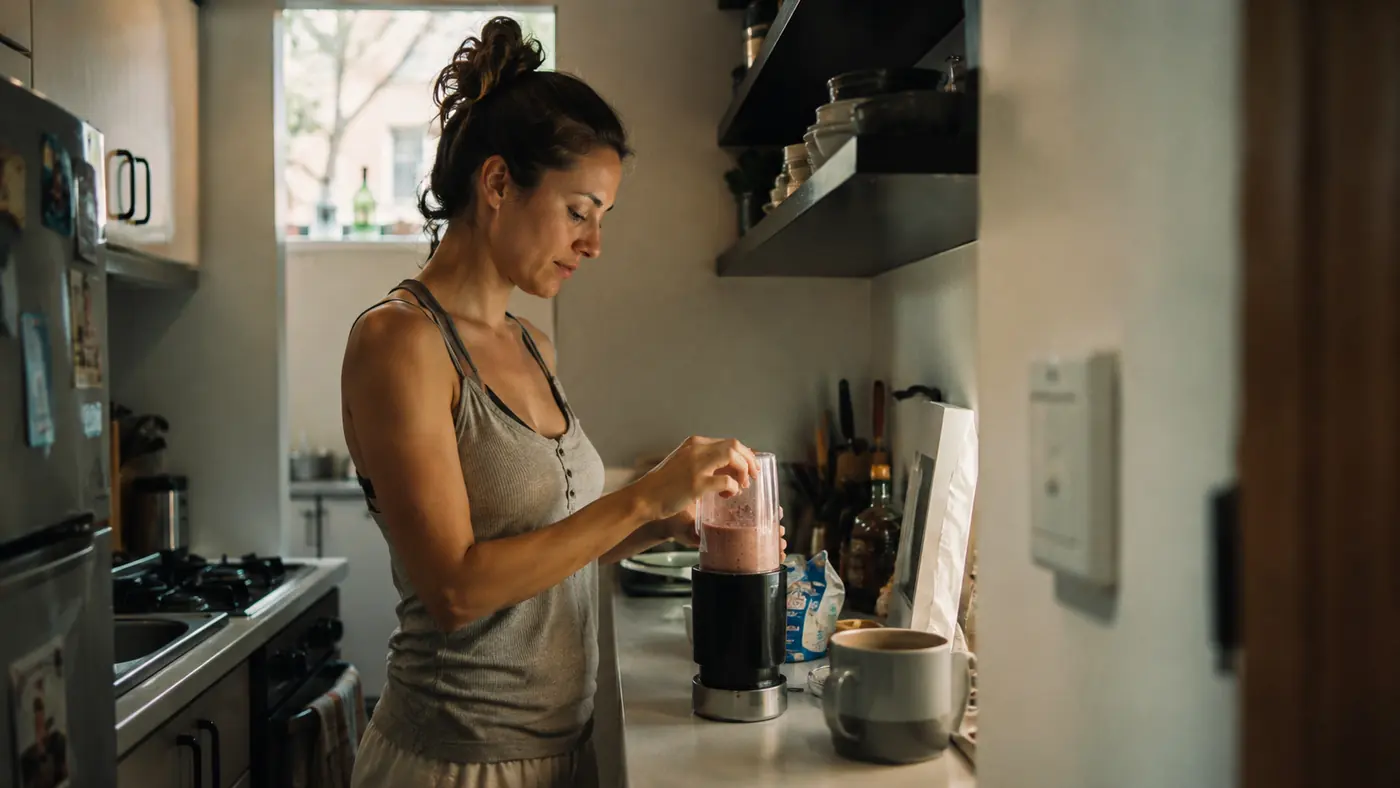
My Magic Bullet blender lives on the little stretch of open counter next to my stove, plugged into the outlet I share with my coffee maker, and most mornings it's doing double duty before 7am: one cup for me, one for Danny, both done in under two minutes flat. If you've ever tried to make a quick smoothie in a full-size blender in a kitchen with three feet of usable counter, you already know the problem. The pitcher is huge, cleaning it eats up sink space you don't have, and by the time you've rinsed it out you've lost the five minutes you were trying to save. I switched to the Magic Bullet for exactly that reason, and after using it almost daily for close to a year, I've landed on a process that gets a quick smoothie made, blended, and rinsed out before I've even finished putting my shoes on. I go into more detail on how it's held up over that stretch in my longer-term review, but this post is just the how-to.
This is a straight walkthrough, not a recipe roundup. I'm going to cover the load order that actually blends evenly in a cup this size, the liquid ratio that keeps the motor from straining, how to handle frozen fruit without stalling everything halfway through, how long to actually run the motor, and how I clean the whole setup in a sink that barely fits a dinner plate sideways. If you've been struggling to get a quick smoothie out of a Magic Bullet without chunks at the bottom or a puddle on the counter, the fix is almost always in the steps below, not the appliance itself.
The Blender That Actually Fits a Two-Outlet Kitchen
If your counter can't spare room for a full-size blender, this is the one appliance that's earned a permanent spot in mine for quick smoothies on weekday mornings.
Amazon Check Today's Price on Amazon →Step 1: Load the Cup in the Right Order
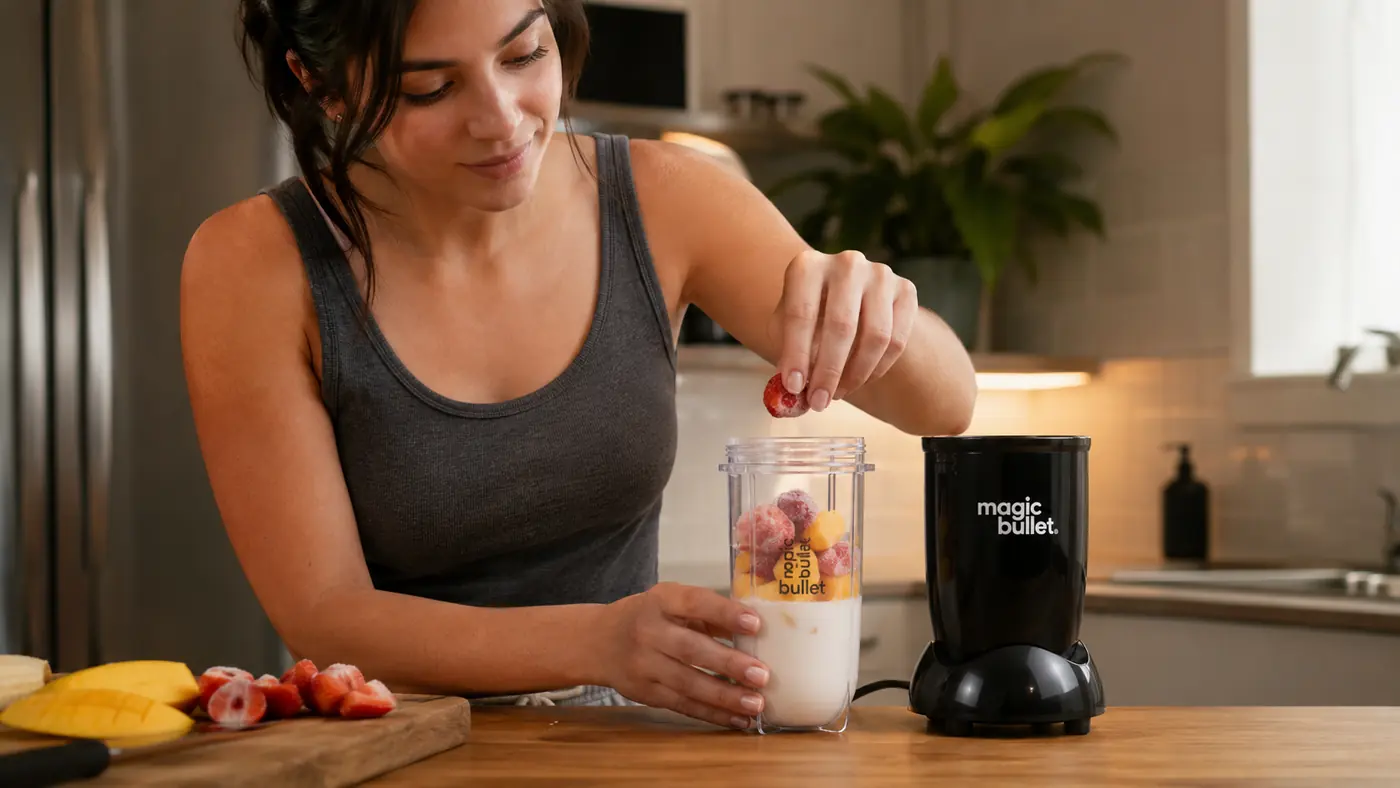
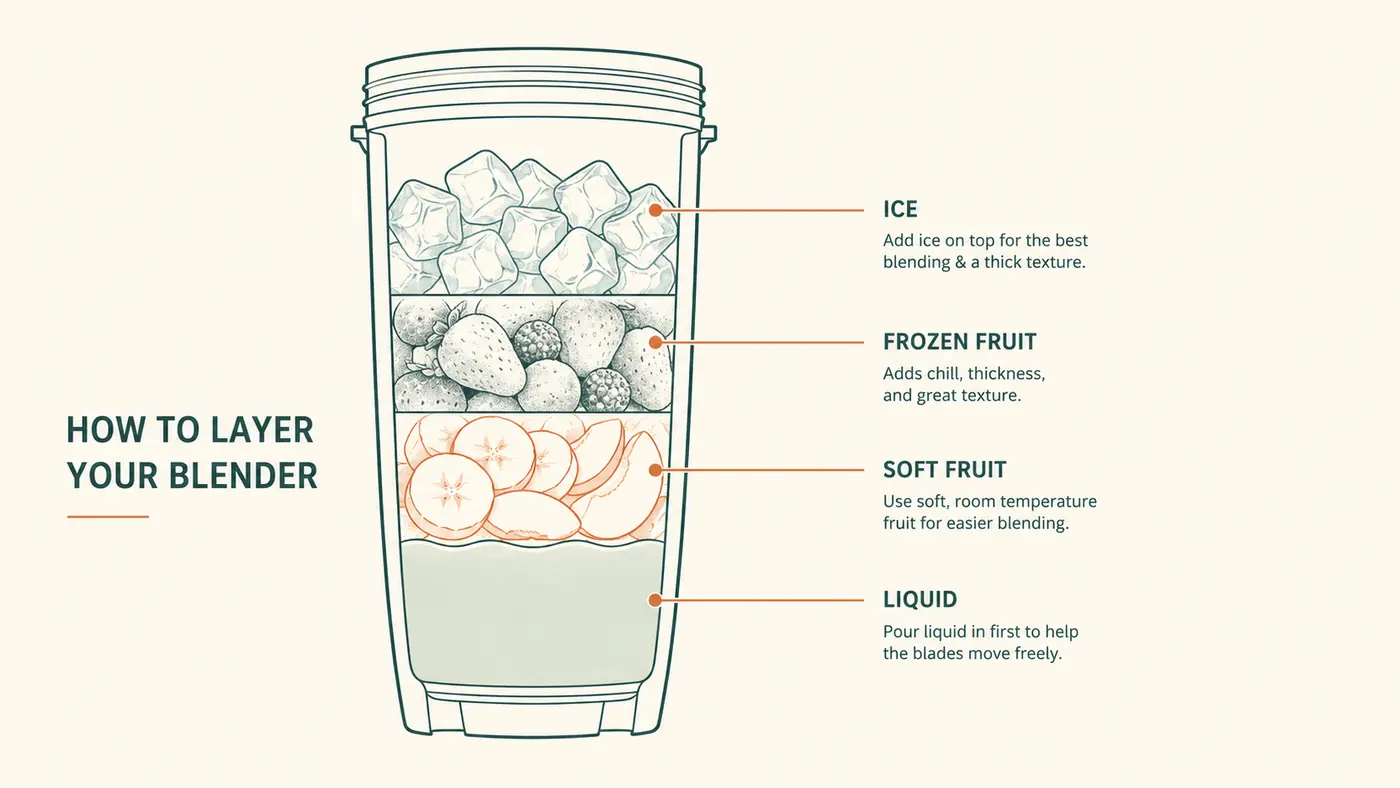
The single biggest mistake I made in my first couple of weeks with the Magic Bullet was loading everything in whatever order it happened to land in the cup. That gives you a blender that spins for ten seconds and then just carves a tunnel straight down through the middle while the blade underneath spins in liquid alone. The fix is a bottom-to-top order: liquid first, then anything soft like a banana or a spoonful of yogurt, then frozen fruit, then ice or frozen chunks last, right up near the blade housing when you flip the cup over.
The reason this matters more in a personal blender than in a full-size pitcher is the shape of the cup. It's narrow and tall, so the blade only really has direct contact with whatever sits closest to it once the cup is inverted onto the base. Liquid at the bottom of the cup means liquid closest to the blade when you flip it, which gives the motor something to pull everything else down into instead of spinning uselessly against solid fruit.
I keep this order the same every single time now, so I'm not thinking about it at 6:45am. Liquid, soft fruit, frozen fruit, ice. It sounds fussy the first time you read it, but after two or three smoothies it becomes automatic, and it's the difference between a smooth quick smoothie and one with a layer of frozen chunks sitting untouched at the top.
Step 2: Get the Liquid Ratio Right for a Small Cup
The tall cup that comes with the Magic Bullet holds about 18 ounces, and the ratio that's worked best for me is roughly one cup of liquid to one and a half cups of fruit, give or take depending on how thick I want it. Too little liquid and the blade spins dry no matter how well you loaded it. Too much and you end up with something closer to juice than a smoothie, plus you risk the liquid line creeping up past the fill mark stamped into the plastic, which is there for a reason.
I use milk most mornings, sometimes water if I'm out, and I've found unsweetened liquids blend more evenly than anything with pulp already in it, like orange juice with bits in it. That pulp tends to clump instead of moving with the blade. If a smoothie comes out thicker than I want after blending, I don't add more liquid and reblend from scratch. I just stir in a splash and shake the cup by hand, which avoids overfilling past the line.
One thing that took me longer to figure out than it should have is that the ratio needs to shift slightly depending on how much frozen fruit you're using versus fresh. More frozen fruit means slightly more liquid, because frozen chunks don't release any moisture the way a ripe fresh banana does. I add an extra splash whenever I'm using a cup that's mostly frozen berries instead of a mix, and I've settled into keeping a small pitcher of milk in the fridge door specifically for this so I'm not hunting for it half-awake.
Step 3: Handle Frozen Fruit Without Stalling the Motor
Frozen fruit is where most of the frustration with a personal blender shows up, and it's also where the Magic Bullet's small motor needs a little help from you. I don't dump a cup straight from the freezer bag anymore. I let frozen fruit sit on the counter for two or three minutes while I'm getting everything else together, just enough to knock the hard edge off without letting it thaw. Straight-from-the-freezer fruit chunks are dense enough that they can bog the motor down, especially stacked on top of ice.
I also break up larger frozen chunks, like a whole frozen banana half, with my hands before they go in the cup rather than relying on the blade to do that work from a standing start. Smaller pieces distribute through the liquid faster and put less strain on the motor in the first few seconds, which is when most stalls happen.
If the motor does bog down mid-blend, which happens occasionally even with the right prep, I stop, twist the cup off the base, give it a shake to redistribute everything, and start again rather than holding the button down and hoping it powers through. Forcing it through a stall is the fastest way to shorten how long any small blender motor lasts, and a five-second pause costs you nothing.
Step 4: Blend in Short Bursts, Not One Long Run
The Magic Bullet doesn't have a timer or speed dial, just a twist-and-hold cup that runs as long as you're pressing down. I blend in bursts of roughly ten to fifteen seconds, pause to let the fruit settle back toward the blade, and repeat two or three times rather than holding it down continuously for thirty or forty seconds straight. That short-burst approach keeps the ingredients cycling past the blade instead of just spinning in one packed layer near the top.
It also keeps the motor from running hot. I noticed early on that a single long run, especially with a lot of ice, made the base noticeably warmer to the touch afterward than a few short bursts did. Since I switched to bursts, that hasn't been an issue, and the motor has held up fine through months of near-daily use.
Total blend time for a normal quick smoothie, start to finish, usually lands around 30 to 40 seconds of actual running time across those bursts. That's short enough that I can start the coffee maker, blend a smoothie, and have both done before the toast pops, which is basically the entire appeal of a personal blender over a full-size one for a morning routine.
Step 5: Clean It in Under Two Minutes in a Small Sink
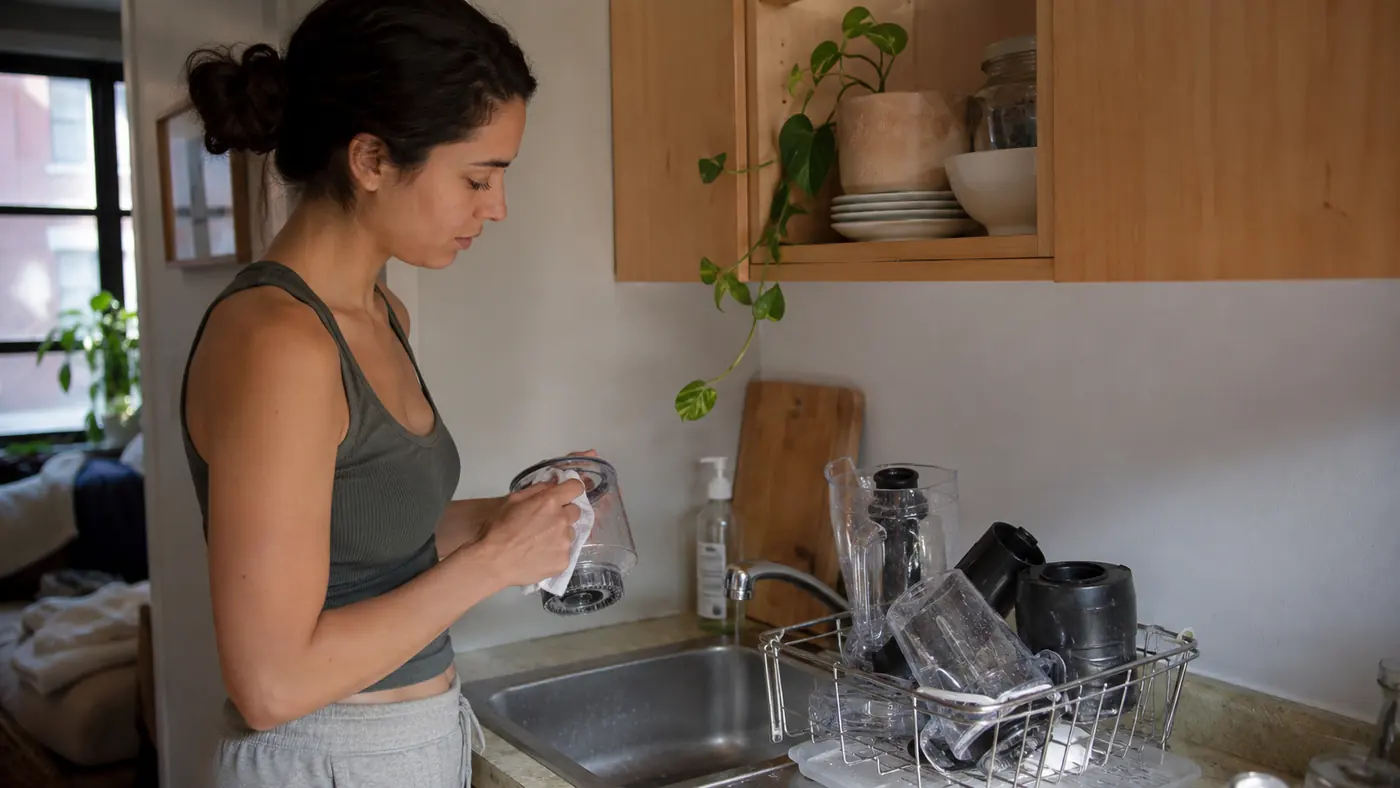
My sink is barely wide enough for a dinner plate laid flat, so anything that requires soaking or scrubbing for ten minutes doesn't survive as a daily habit in my kitchen. The cup and blade attachment go straight under warm running water the moment I've poured the smoothie out, while whatever residue is on there is still loose. A quick swirl with a bottle brush around the blade gets it clean in under a minute, most days without soap at all if I rinse it right away.
The blade attachment is the one piece I'm careful with, since the blades sit low and close to the threading. I hold it by the plastic collar, not the metal, and rinse it under the tap rather than letting it sit loose in a sink full of other dishes where I might reach in without looking. The base itself never touches water. A damp cloth wipe on the outside is all it's needed in the time I've owned it.
Because the whole setup is small enough to dry on the corner of my dish rack rather than needing its own drying space, cleanup has never been the reason I skip making a smoothie some morning. That's really the test for any appliance in a kitchen this size. If the cleanup is annoying enough, you stop using it within a month regardless of how good the results are.
What Else Helps
A few small habits outside the five steps above have made a real difference. I portion frozen fruit into single-serving bags right after I get home from the store, so I'm never eyeballing amounts half-asleep on a weekday morning. I also keep the spare cup that comes in the Magic Bullet set in the fridge overnight if I know I'm making two smoothies back to back, which saves a wash cycle between Danny's and mine. And I've stopped trying to blend anything fibrous like whole celery stalks without chopping them down first, since long stringy pieces are the one thing that reliably wraps around the blade instead of chopping cleanly, regardless of how well everything else is loaded.
I also keep a short list on the fridge of go-to combinations so I'm not standing there thinking at 6:45am, and I stick to two or three fruits per cup rather than throwing in everything I own, which keeps the blend time down and the cleanup simpler. If you're weighing whether a compact personal blender like this one is worth giving up counter space for versus a bigger pitcher blender, I laid out the tradeoffs in more detail in 10 reasons personal blenders beat full-size blenders for anyone still on the fence.
The Magic Bullet was never going to out-power a full-size blender. What it does instead is fit the three feet of counter I actually have, and get a quick smoothie made and cleaned up before I've finished my coffee.
The Small-Kitchen Fix for a Two-Minute Smoothie
If mornings in your kitchen are as tight on counter space as mine, this is the appliance that's made quick smoothies an actual daily habit instead of a weekend project.
Amazon Check Today's Price on Amazon →