

The Magic Bullet Blender lived on my kitchen shelf for exactly four days before I actually understood what I'd bought. Danny and I registered for one years ago when we still had a normal-sized kitchen, and when we downsized into this 500-square-foot apartment, it was one of three small appliances that survived the cut. I've used it several times a week since, mostly for smoothies before work and the occasional sauce or dressing when I don't want to drag out a full-size blender that doesn't fit anywhere in my three feet of usable counter. What follows isn't the review you get from someone who unboxed this thing, took a few photos, and wrote a glowing post the same afternoon. This is what I actually learned once the box was broken down and recycled and the Magic Bullet had to earn its spot next to my two outlets like everything else in this kitchen.
Most reviews of this thing repeat the same handful of points straight from the product listing: compact, surprisingly powerful for its size, dishwasher-safe parts, cups you can drink straight out of. All true. None of it is what actually determines whether you'll reach for this every week or shove it in a cabinet by month two. The stuff that matters, the noise level, how long you can actually run it before it needs a break, what it genuinely cannot crush, and what that rubber gasket looks like after real use, is the stuff nobody puts in the marketing copy. So that's what this review covers.
The Quick Verdict
Genuinely useful for what it's built for, liquid-forward smoothies and small-batch prep, but the run-time limit, the noise, and the unused accessories are worth knowing before you buy.
Amazon Check Today's Price →Before You Add This to Your Cart, Read the Part the Listing Leaves Out
The Magic Bullet does what it's built to do, but the run-time limit and the noise level surprised me. Check today's price and specs before you decide.
Amazon Check Today's Price on Amazon →How I've Actually Used It
I've run the Magic Bullet several times a week for months now, mostly smoothies, some salad dressings, a handful of small-batch pancake batters, and enough protein shakes that Danny has started calling it 'your machine' whenever it's out on the counter. This isn't a one-week test written the same day the box arrived. It's what daily use in a real apartment kitchen actually looks like, including the parts that never make it into a five-star review posted the week someone got theirs in the mail.
When I unboxed it, there were eleven separate pieces laid out across my counter, which is a lot for something marketed as compact. Power base, two different blade attachments, a tall cup, a short cup, a party mug, resealable lids, comfort rings, a recipe book. I remember standing there thinking I'd need a whole drawer just to store the accessories, which felt like it defeated the point of buying something small in the first place. That first impression turned out to matter more than I expected, and I'll get into exactly which of those eleven pieces I actually use further down.
I also want to be upfront about what my testing actually looked like, because 'I've used it a lot' isn't specific enough to be useful. I tracked roughly how often it came out of the cabinet over a four-month stretch, logged the handful of times it stalled or leaked, and paid attention to which of the eleven pieces I reached for versus which stayed untouched in the back of the cupboard. It's not a lab test, it's a real kitchen with a small counter and a partner who eats breakfast on his way out the door, but it's the kind of use that actually reveals whether an appliance holds up past the first two weeks.

What's Actually in the Box, and What You Never Touch
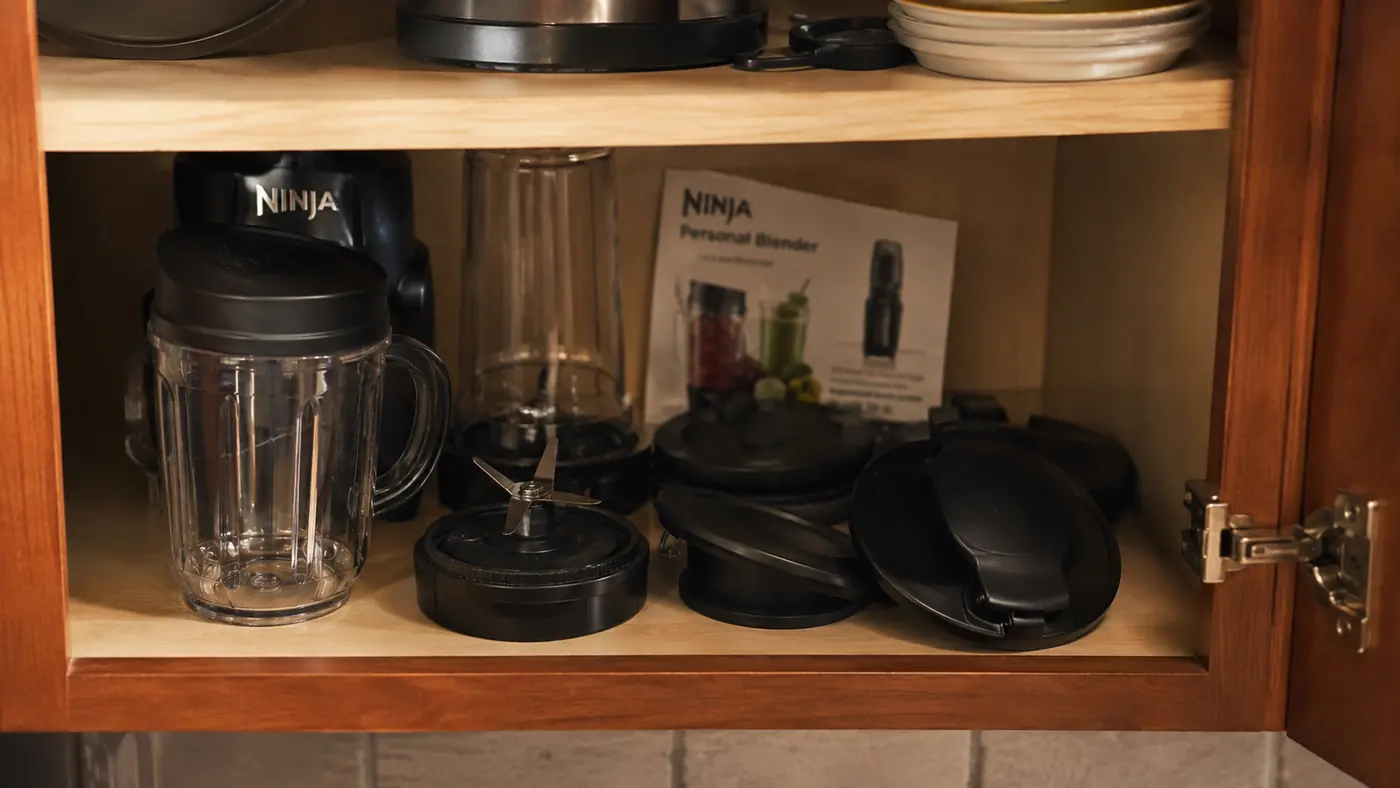
Here's the honest inventory. You get the power base, a cross blade for things like ice and frozen fruit, a flat blade for lighter jobs like dressings, a tall cup, a short cup, a party mug, two stay-fresh resealable lids, two comfort lip rings so you can drink out of the cups without cutting your mouth on the threading, and a small recipe booklet. That's eleven pieces by Magic Bullet's own count. In four months, I have used the power base, the cross blade, and the tall cup on a near-daily basis. Everything else sees occasional use at best.
The party mug is the one I'll call out specifically because it sounds useful and isn't, for me anyway. It's sized more like a shot glass with a blade attachment, meant for single servings of things like salsa or a small dip. I used it twice in the first month, decided the tall cup does the same job with more capacity, and it's been in the back of my cabinet since March. The recipe book didn't survive past week two either, mostly because the recipes assume ingredients and quantities that don't match how Danny and I actually eat. If you're buying this expecting to use all eleven pieces in regular rotation, budget for the reality that you'll probably land on two or three.
The Run-Time Limit Nobody Mentions
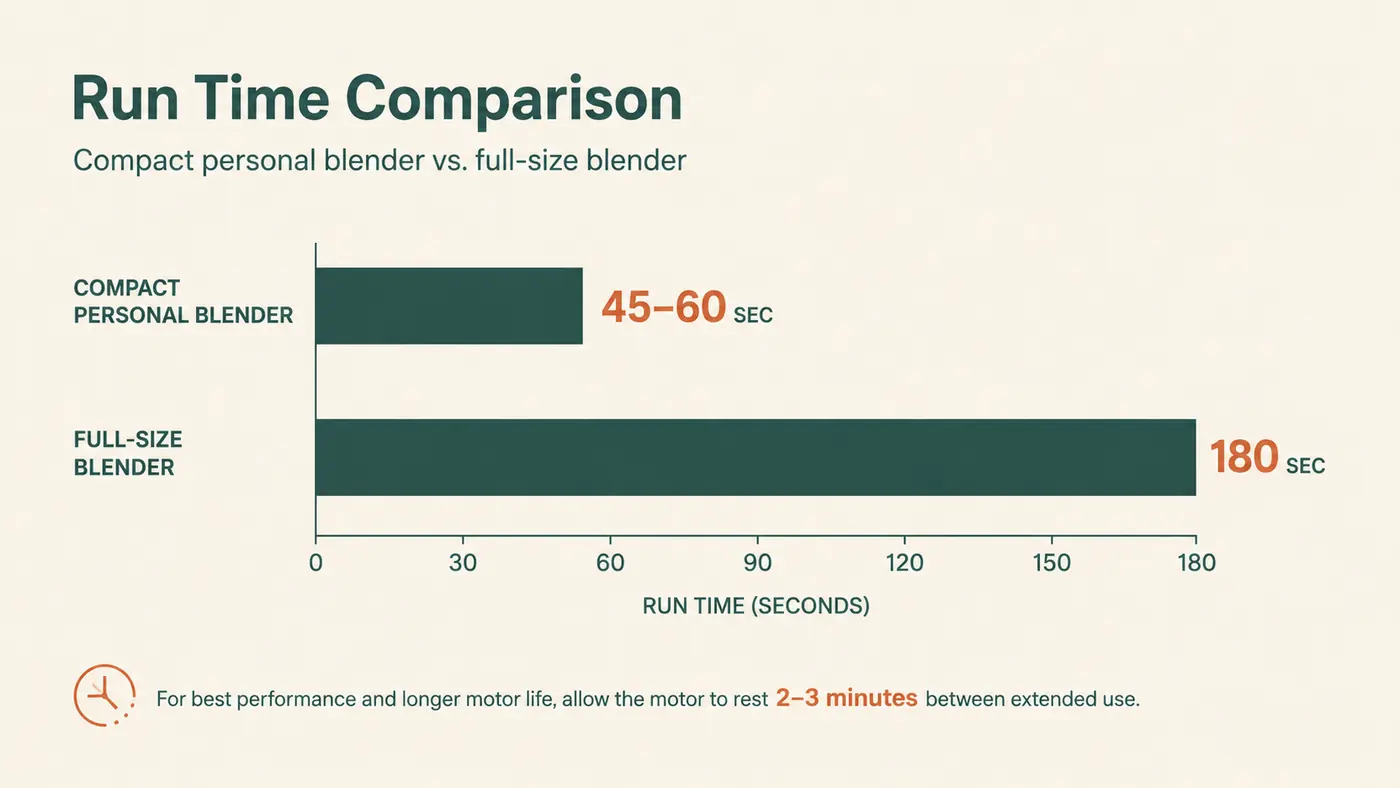
This is the part that genuinely surprised me and that I haven't seen called out clearly in other reviews. The Magic Bullet is not built to run continuously. You twist the cup onto the base and hold it down to blend, and the motor is meant to work in short pulses rather than one long continuous run. Push past roughly a minute of nonstop blending, especially on something dense like frozen fruit, and you'll notice the motor start to labor, the pitch of the noise change, and in one case for me, the base actually got warm enough that I let it rest before running it again.
In practice this means smoothie mornings take a specific rhythm: blend in short bursts, stop, shake the cup or scrape down the sides, blend again. It's not a dealbreaker once you know to expect it, but it is a real adjustment if you're used to a full-size blender that just runs until the drink is smooth. Nobody tells you this before you buy it because it doesn't show up in a 30-second product video where someone blends a smoothie in one continuous shot. In my kitchen it adds maybe 20 to 30 seconds to a smoothie, which I've made peace with, but it would have been useful to know going in.
The noise is worth mentioning in the same breath, because the two are related. A small motor working in short high-effort bursts is not a quiet motor. It's a genuinely loud, high-pitched whine, louder in my experience than the full-size blender I used to own, probably because there's less housing around the motor to muffle it. I don't run the Magic Bullet before 7am if Danny's still asleep in the next room, which in a 500-square-foot apartment is basically the same room.
What It Can't Crush
The Magic Bullet is genuinely good at soft-to-medium jobs: fruit, yogurt, liquid-based smoothies, dressings, small batches of salsa. Where it struggles is anything hard and dry. Whole ice cubes straight from the tray are hit or miss, some blends leave chunks that never fully break down, and if I want a smooth iced drink I've learned to use crushed ice or let cubes sit out for a minute first. Whole nuts into a smooth butter isn't something this machine does well either. It'll chop them into rough pieces before the motor starts laboring, not turn them into anything close to smooth.
Frozen fruit is similarly a mixed bag depending on how frozen it actually is. Frozen banana chunks straight from the freezer, rock hard, will sometimes stall the blade entirely, and I've had to stop, remove the cup, and manually loosen things with a spoon before restarting. Slightly thawed, five or so minutes on the counter, and it handles the same fruit without issue. This is a small-motor appliance and it behaves like one. If your smoothie routine depends on crushing ice or hard frozen fruit straight out of the freezer every morning, this is the honest limitation to know about before you buy. If you're weighing this against another compact option specifically, I did a closer side by side in Magic Bullet vs. NutriBullet.
The Gasket and Seal Reality
Every cup has a rubber gasket built into the blade attachment, and that gasket is doing more work than it looks like. It's what keeps whatever you're blending from leaking out around the threading where the blade screws onto the cup. Mine has held up fine so far, but I've read enough about this model and talked to enough people who've owned one longer than I have to know this is the part that eventually needs attention. The gasket can warp or go stiff with repeated use, especially if you're regularly blending anything acidic or oily, and once it does, you'll get leaking at the seam even when everything is screwed on correctly.
The practical fix, and something worth knowing before you're standing over your sink with dressing running down the side of the cup, is that replacement gaskets and blade assemblies are sold separately for this model. I haven't needed one yet, but I inspect mine now every couple of weeks, mostly just eyeballing it for cracks or a gasket that's gone stiff instead of staying pliable. It's a five-second check that costs nothing, and it's the kind of maintenance detail that doesn't show up anywhere in the box or the instructions. I've also started making sure the cup is fully dry before I screw the blade back on, since I noticed the gasket seats more evenly that way and leaks less at the seam.
Cleaning: The Part That Gets Left Out of the Marketing
The cups and lids are dishwasher-safe on the top rack, and that part of the marketing is accurate. The blade assembly is the piece I hand wash every time, because food gets packed underneath the blade itself, right where it meets the gasket, and a dishwasher cycle doesn't reliably clear that out. If you skip hand washing the blade for even a couple of uses, you'll notice a smell developing underneath it that a normal rinse won't fix. I run warm water through the blade housing right after I unscrew it, before anything has a chance to dry on.
The base itself, the motor housing you never submerge, needs a wipe-down more often than I expected, mostly because a small blender running at high speed in short pulses tends to splash. If you're using it for anything with turmeric, berries, or beet in the mix, wipe it down the same day or you'll be dealing with a stain later. None of this is difficult, but it is more hands-on maintenance than the just-toss-it-in-the-dishwasher impression the product listing gives you.
What I Liked
- Genuinely compact, the whole footprint fits in a corner of my three feet of counter
- Handles smoothies, dressings, and small-batch sauces well without any real learning curve
- Cups double as drinking vessels with the included lids, which cuts down on extra dishes
- Motor is powerful enough for its size that soft and liquid-based ingredients blend evenly
Where It Falls Short
- Cannot run continuously, needs short pulses or the motor starts to labor and heat up
- Struggles with whole ice cubes and hard frozen fruit straight from the freezer
- Loud, high-pitched motor noise that's more noticeable than a full-size blender
- Rubber gasket on the blade assembly will eventually need replacing with regular use
- Several of the eleven included pieces, the party mug especially, ended up rarely used
The gap between what's in the box and what you'll actually use is the part nobody mentions until you've already unpacked all eleven pieces onto your counter.
Who This Is For
This has been the right fit for someone in a small kitchen who wants fast, single-serving smoothies, dressings, and light prep work without giving up real counter space. If your blending needs are mostly liquid-forward, fruit, yogurt, dressings, sauces, the Magic Bullet handles that well and the tall cup alone covers most of what I actually make. It's also a reasonable pick if you live somewhere like a dorm or a small apartment kitchen with limited outlets, since it takes up barely more room than a coffee mug when it's not running. I wrote more about how it fit into my actual morning routine in the full story of how this changed my mornings.
Who Should Skip It
If your routine depends on crushing whole ice cubes daily, making nut butters, or running the blender continuously for a minute or more at a time, this isn't the right tool, and no amount of technique fully gets around the motor's limits. I'd also say skip it if you're someone who wants to use every accessory in a set, because in my experience several of the eleven pieces end up as drawer clutter rather than regular tools. And if noise is a real concern, someone sleeping nearby or thin apartment walls, it's worth knowing upfront that the Magic Bullet is not a quiet appliance.
Know the Tradeoffs, Then Decide if It Still Earns Your Counter
Short run times, real noise, a gasket to keep an eye on. If that's a fair trade for the counter space you get back, this is worth a closer look.
Amazon Check Today's Price on Amazon →