
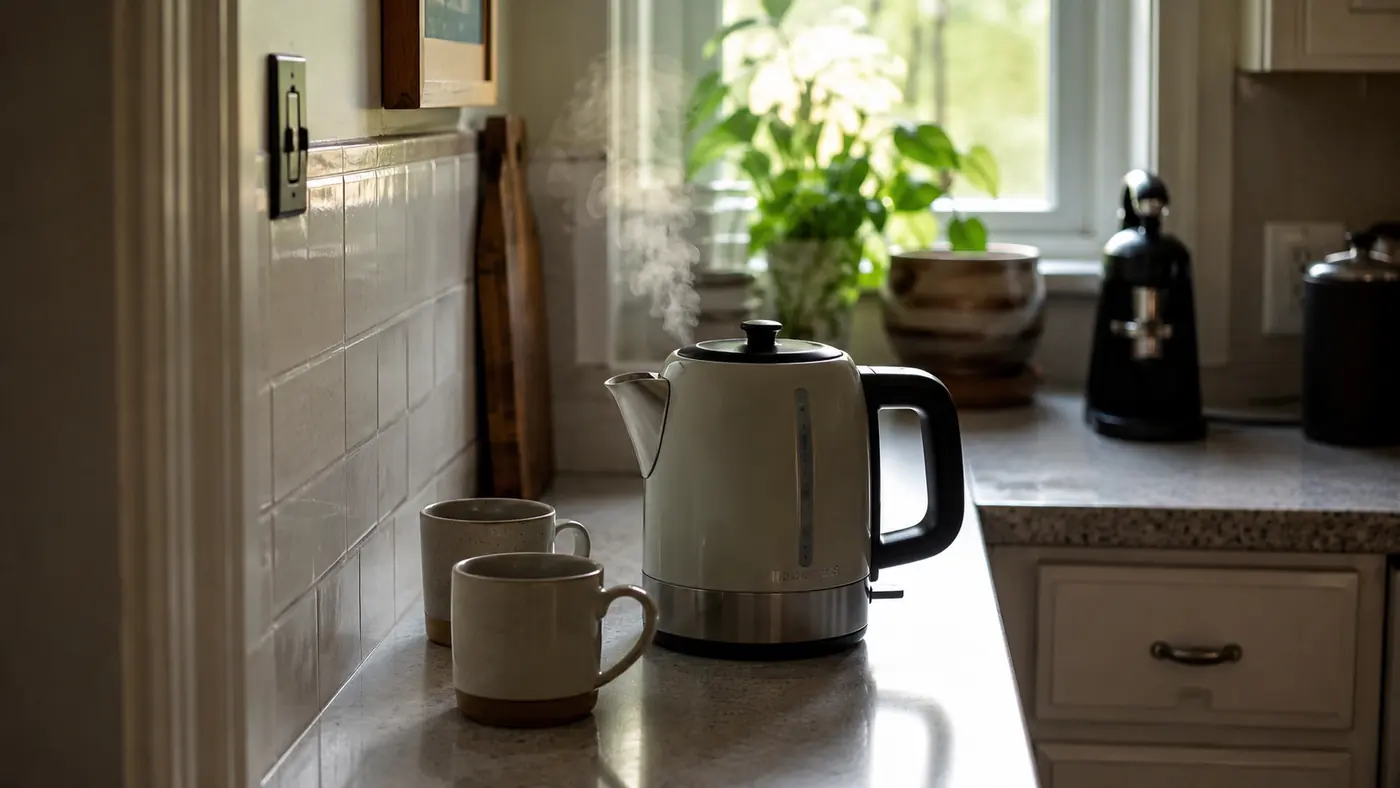
Every review I read before buying the Hamilton Beach 1 Liter Electric Kettle made it sound like a simple, no-drama purchase. Plug it in, press the button, get hot water in two minutes. That's mostly true. What none of those reviews mentioned is that the 1 liter number on the box is not the number you actually get to use, that there's no way to pick a temperature below full rolling boil, and that the spout dribbles a little every single time you pour unless you tilt it at exactly the right angle. None of that makes it a bad kettle. It just means the listing photos and the five-star headlines leave out the stuff you only learn after living with it in a real kitchen, which is what I've been doing in my 500-square-foot apartment for months now.
This isn't a takedown. I still use this Hamilton Beach kettle most mornings, and my partner Danny reaches for it more than I do at this point. But if you're the kind of person who reads reviews specifically to avoid getting surprised, this is the version I wish I'd read before I bought mine. I'm going to walk through the fill line, the lack of temperature control, the pour spout quirk, how hot the outside gets on a crowded counter, how loud it gets right before it shuts off, and what descaling actually looks like once you've been running it on tap water for a while.
The Quick Verdict
Genuinely useful and fast, but the real usable capacity is smaller than advertised, there's no temperature control, and the spout needs a specific pour angle to avoid dripping.
Amazon Check Today's Price →Fast Hot Water, With a Few Quirks Nobody Mentions in the Photos
If you're weighing this against the pricier kettles with digital displays, here's the honest version of what a basic one-liter kettle actually delivers day to day.
Amazon Check Today's Price on Amazon →How I've Actually Used It
My kitchen has two outlets and about three feet of usable counter, so before this Hamilton Beach kettle earned a permanent spot, it had to prove it wasn't just going to sit in a cabinet. It boils water for my morning coffee pour-over, Danny's tea, the occasional bowl of instant oatmeal, and softening pasta water faster than waiting on the stove. It gets used at least once a day, sometimes three or four times if we're both making hot drinks separately, which happens more than I expected in a two-person household.
Before this, I used a plain stovetop kettle that lived on the back burner and took anywhere from five to eight minutes depending on how much water I'd put in. Switching to an electric kettle sounded like it would just save time, and it does, usually more than two minutes faster for the same amount of water, but what actually changed my routine was not having to hover near the stove to hear the whistle. I can start it, walk to the bathroom, and it clicks off on its own instead of screaming until I get back.
I want to be upfront that I didn't get this kettle for anything fancy. I don't do pour-over coffee that needs a specific temperature, I'm not making delicate green tea that scorches above 175 degrees, and I'm not running it constantly all day the way a shared office kitchen might. That context matters for how I'm reviewing it, because a lot of the honest complaints below hit harder if your use case is more specialized than mine.
For anyone comparing this against a step-up model before buying, I put together a side by side in Hamilton Beach vs. Cosori electric kettles that covers where the extra features actually matter and where they don't.
The Real Usable Capacity Behind That 1 Liter Number
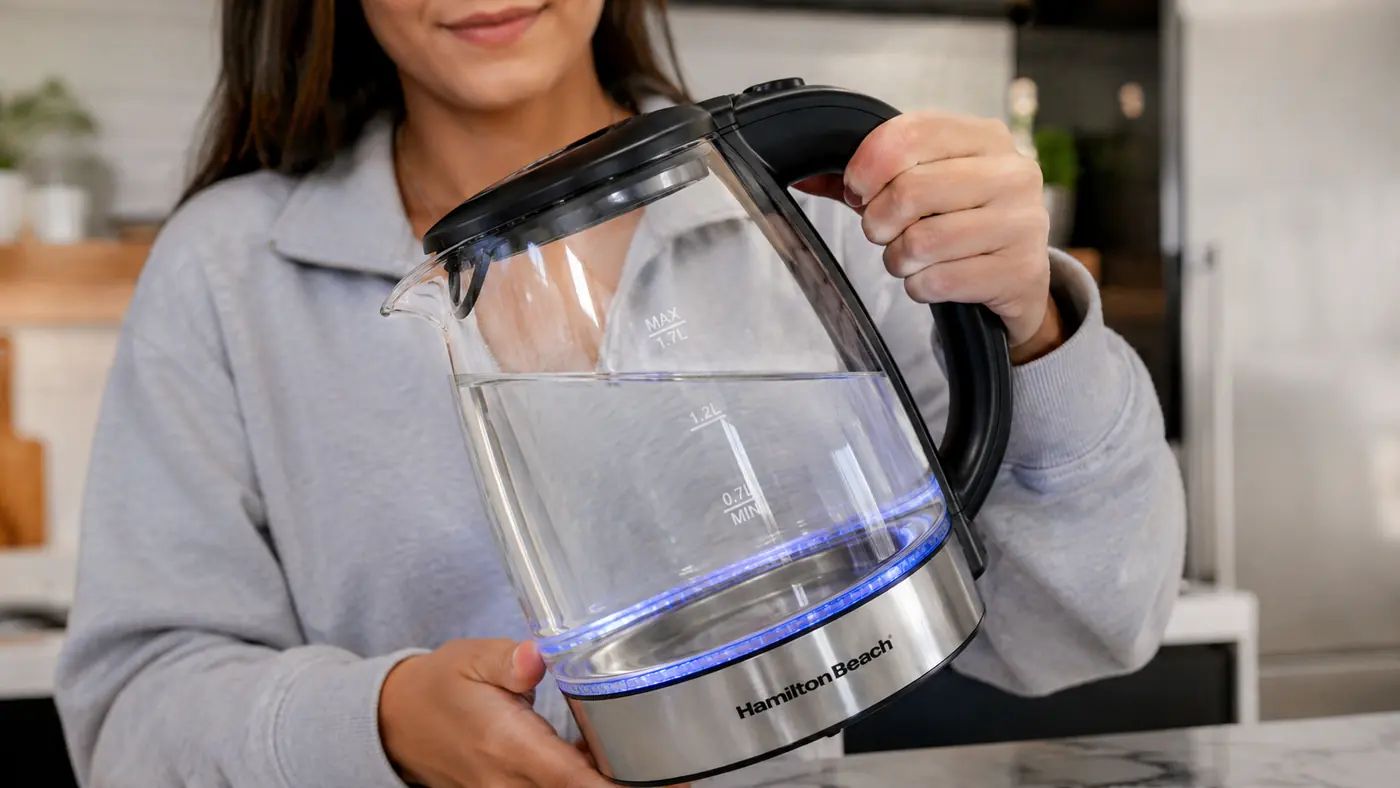
Here's the first thing nobody tells you clearly enough. The kettle is labeled 1 liter, and the interior does have a max fill line printed near that mark. But if you actually fill it to that line, you're taking a real risk of hot water spitting out around the lid or the spout once it hits a rolling boil. I learned this the first week, filling it close to max for two big mugs of tea, and watching a thin stream of water spatter out near the hinge as it came to a boil. Not dangerous, just messy and a little startling the first time.
The water window itself is a narrow strip on the side of the Hamilton Beach kettle with etched lines for cups and milliliters, and it's genuinely hard to read at a glance, especially with the light off or when you're filling it at the sink instead of setting it on the counter first. I've caught myself squinting at it more than once to figure out if I'd hit the right mark, and I've overfilled it by guesswork a handful of times because the markings don't stand out much against the plastic. A small thing, but it adds up if you're filling this kettle every single morning half awake.
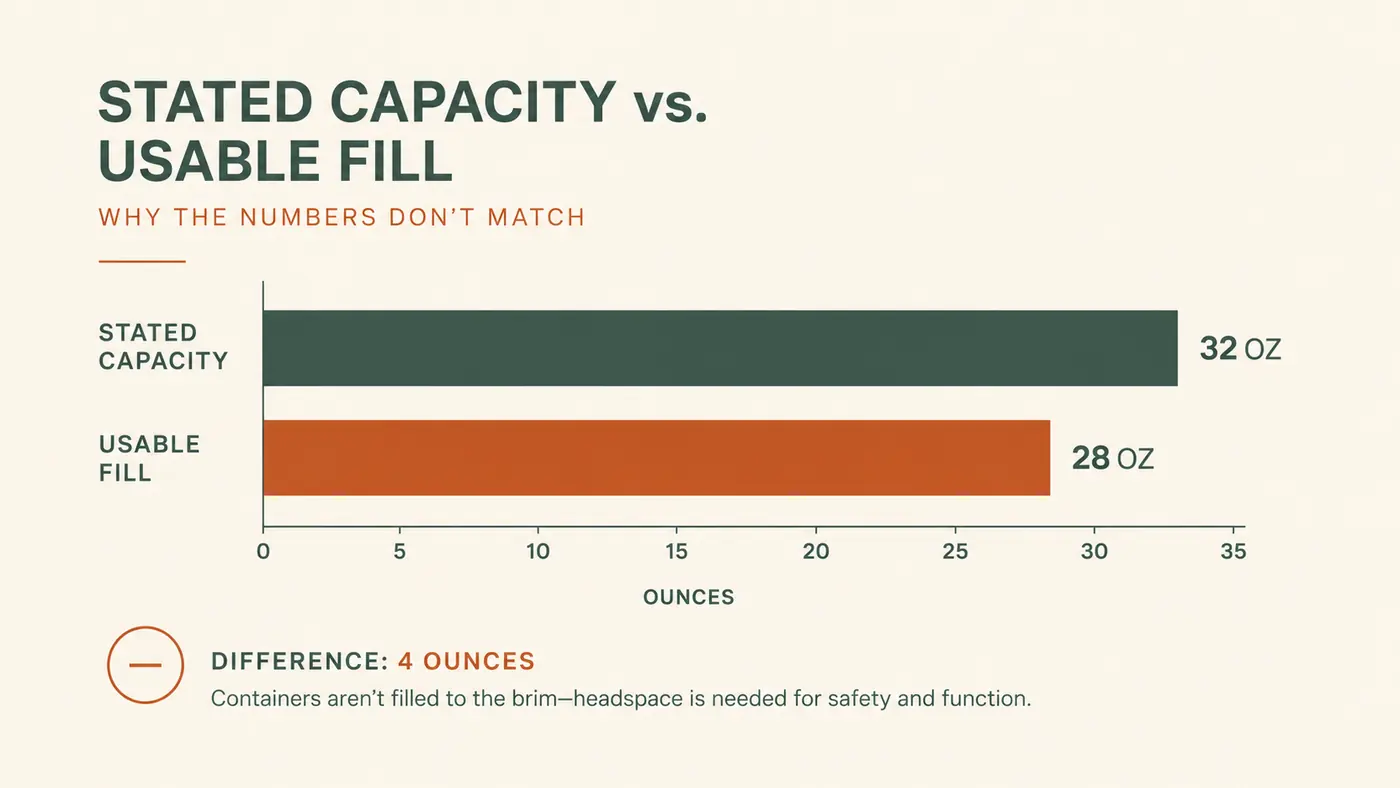
In practice, the usable fill line where I never get spatter or spillover sits closer to about three-quarters of that marked capacity. That's still enough for two generous mugs most of the time, which covers Danny and me on a normal morning, but it is not the full liter the packaging implies. If you're buying this specifically to fill it once and pour for three or four people, plan on running it twice rather than assuming the stated capacity is the working capacity.
I don't think this is unique to Hamilton Beach. Most kettles in this price range print a technical max capacity rather than a realistic pour-safe capacity, and almost none of the marketing photos show you where that gap actually is. It just would have been nice to know going in instead of finding out with a small puddle on my counter.
No Temperature Control: What That Actually Means
This kettle has one setting: boil. There's no dial, no preset for green tea or French press coffee, no keep-warm function. You press the switch, it heats until it hits a full boil, and it clicks off. For basic tea, instant coffee, oatmeal, and general hot water needs, that's genuinely fine and honestly simpler to live with than I expected. I don't have to think about anything. I press the button and walk away.
Where it becomes a real limitation is if you drink a lot of delicate tea. Green and white teas are typically best around 175 to 185 degrees, well under boiling, and pouring boiling water directly over those leaves tends to scorch them and pull out more bitterness than you want. I've worked around it by boiling and then letting the water sit for a few minutes before pouring over lighter teas, which isn't precise but gets close enough for casual use. If you're someone who takes tea temperature seriously, a kettle with actual presets is going to serve you better than working around this one's single boil setting.
French press is the other spot where the single boil setting shows up. The common advice is to let boiling water rest for thirty seconds to a minute before pouring over coarse coffee grounds, since water straight off a rolling boil can over-extract and turn a cup bitter. I've adjusted to that rhythm now, but it's an extra step I didn't have to think about with a stovetop kettle, where I was already eyeballing the temperature by ear and instinct rather than a hard boil trigger.
The Pour Spout, the Lid, and Pouring One-Handed
The spout on this Hamilton Beach kettle pours cleanly if you tip it at a moderate, steady angle. Pour too fast or too shallow, and you'll get a small dribble down the outside of the spout that lands on the counter or the outside of your mug. It's not a design flaw exactly, most kettles in this price bracket have some version of this, but it took me a couple weeks of pouring to figure out the angle that avoids it consistently. Now it's automatic, but that learning curve is real and nobody mentions it in a five-star review written after one use.
The handle is where the honest picture gets more nuanced. When the kettle is filled anywhere near its usable line, pouring one-handed takes real wrist control, especially in the last few seconds when you're tipping past a steep angle to get the last of the water out. It's not heavy in any absolute sense, but a full kettle of boiling water asks more of your grip than an empty one does, and I've learned to keep my other hand near the counter as a backup rather than trusting the pour entirely to one arm, especially first thing in the morning before I've had any coffee at all.
The lid is hinged and pops open with a small button rather than lifting off entirely, which is genuinely convenient for filling at the sink one-handed. The tradeoff is that the hinge mechanism has gotten slightly stiffer over the months I've had it, and it now takes a firmer press to pop open than it did when it was new. It still works every time, it's just not as smooth as day one, and that's the kind of small mechanical wear you only notice with sustained daily use rather than a first-week review.
How Hot the Exterior Gets on a Crowded Counter
This is one nobody warned me about either. Once the Hamilton Beach kettle has been running a minute or two, the outer shell near the base and lower third gets warm enough that I wouldn't want a kid or a curious cat brushing against it, though it never got hot enough to be alarming or to feel unsafe under normal use. The lid and handle stay cool enough to grab immediately after boiling, which is the part that actually matters day to day, but the body itself is not something I'd want pressed right up against the toaster or another appliance while it's running.
That mattered more than I expected given how tight my counter actually is. I keep about two inches of clearance between the kettle and anything else on that side of the counter now, mostly out of habit after noticing the warmth once while reaching past it for the coffee grinder. If your counter setup means appliances have to sit shoulder to shoulder, it's worth factoring in that this one runs warm enough on the outside to want a little breathing room, not just outlet access.
How Loud It Gets, and What the Auto Shutoff Actually Protects
Nobody tells you how loud these things get right before they shut off, and it caught me off guard the first time. For most of the boil cycle, it's a low hum you can talk over. In the last twenty or thirty seconds before it reaches full boil and clicks off, the rumbling gets noticeably louder, almost a rattle, before it cuts out. It doesn't damage anything and it's completely normal for electric kettles in general, but if you're running this early in the morning in a small apartment while someone's still asleep in the next room, that last stretch is not subtle.
The auto shutoff itself is worth being clear-eyed about. It reliably cuts power once the water hits a rolling boil, and it has never once failed to trigger for me. What it doesn't do is protect you if you run the kettle with too little water in it, or if you set it on the base slightly crooked so the contacts don't seat fully. Both of those are user error more than a kettle flaw, but the marketing language around auto shutoff implies a level of foolproof safety that only really covers the one scenario it's designed for, which is a normal fill boiling to completion.
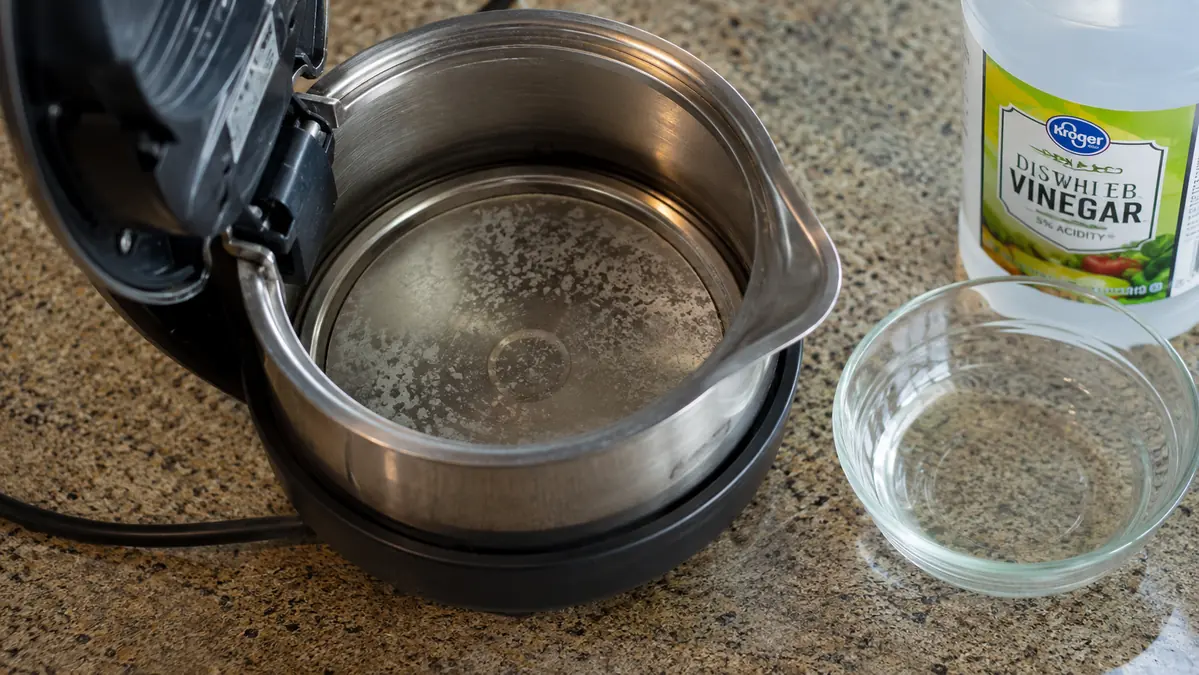
The bigger honest disclosure is descaling. We have moderately hard tap water where I live, and within about six weeks of daily use, I started noticing a faint white film building up on the heating element at the bottom of the kettle. That's mineral scale, and it's completely normal, but it's also something the packaging doesn't warn you to expect on any specific timeline. Left alone, scale buildup can affect how efficiently the kettle heats and can eventually flake into your water, which is not something you want in your morning tea.
The fix is simple: a solution of equal parts water and white vinegar, brought to a boil, then left to sit for about twenty minutes before rinsing thoroughly two or three times. It takes maybe half an hour total, including rinse cycles, and I've settled into doing it roughly once a month. It's not hard, but it is a maintenance task the box doesn't mention, and skipping it long-term is how kettles like this one start tasting faintly metallic or heating more slowly than they used to.
Cord Length and Counter Footprint
The base and kettle together take up a small footprint, roughly the width of a dinner plate, which has mattered a lot given my two-outlet reality. It lives on the counter permanently now, plugged into the outlet closer to the sink so I can fill it without carrying it across the kitchen. The cord itself is on the shorter side, which I actually prefer for a countertop appliance since a long dangling cord is just something to catch on a sleeve, but it does mean you need an outlet reasonably close to wherever you want the Hamilton Beach kettle to live.
I did consider, briefly, whether keeping it permanently plugged in was worth losing one of my two outlets to something that isn't the coffee maker or the toaster. In the end the kettle won that fight because it's the appliance I reach for daily, but if your outlet situation is even tighter than mine, that's a real tradeoff worth thinking through before you buy, not after.
The kettle detaches from its power base for pouring, which is standard for this style, and that's honestly one of the better design choices here. No cord swinging near the stove or getting in the way while you're carrying hot water to a mug. If you're weighing this against a full electric kettle setup as part of a bigger kitchen routine, I also wrote up a quicker walkthrough in how this kettle actually fits into a real morning if you want the day-to-day version rather than the teardown version.
What I Liked
- Boils water fast, usually under two minutes for a couple mugs worth
- Detachable base keeps the cord out of the way while pouring
- Small footprint that fits a narrow counter without crowding prep space
- Auto shutoff has worked reliably every time, no failures to trigger
- Simple one-button operation with no learning curve for basic use
Where It Falls Short
- Stated 1 liter capacity is not the safe usable fill, closer to three-quarters of that
- No temperature control, boil is the only setting available
- Pour spout dribbles unless you use a specific, steady tilt angle
- Exterior gets warm enough on a crowded counter to want a little clearance
- Needs monthly descaling with hard water or performance and taste start to slip
The honest version of any kitchen appliance review isn't the one that tells you it's perfect. It's the one that tells you exactly where the compromises are so you can decide if you can live with them.
Who This Is For
This has worked well for me because my needs are simple: hot water for tea, coffee, and oatmeal, fast, without a lot of fuss. If that's your use case too, and you're working with limited counter space and outlets the way I am, the Hamilton Beach kettle earns its spot. It's affordable, it's reliable at the one thing it does, and once you learn the pour angle and build descaling into your routine, the quirks stop feeling like quirks and just become how the thing works.
It's also a solid pick if you're replacing stovetop kettle boiling entirely, since even with its real-world capacity limits, it's still faster and more hands-off than waiting on a burner in a kitchen where the stove is already crowded with other cooking.
Who Should Skip It
If you're serious about tea and need precise temperature control for green, white, or oolong varieties, skip this Hamilton Beach model and look at a kettle with actual presets. If you regularly need to boil water for four or more people at once without refilling, the real usable capacity here is going to feel small fast. And if you're not willing to add a monthly descaling habit to your routine, especially with hard tap water, you'll notice the performance and taste drift over time in a way that's avoidable but does require the extra step. For everyone else making tea and coffee for one or two people in a tight kitchen, it's a genuinely solid, unglamorous workhorse.
Now You Know the Quirks, Here's Where to Check Current Availability
Fast, simple, and honestly a little louder and smaller-capacity than the box implies. If that tradeoff works for your kitchen, it's worth a look.
Amazon Check Today's Price on Amazon →