For most of the ten years I lived without a dedicated kettle, making tea meant filling a saucepan, setting a stovetop burner to medium, and standing there for eight or nine minutes waiting for a simmer, all while that pan took up the one burner I needed for anything else. I finally bought a Hamilton Beach Electric Kettle two winters ago because Danny drinks tea every morning before work and I got tired of hearing the stovetop kettle whistle through the wall while I was still trying to make coffee at the same two-outlet counter. This guide is the actual routine I use now, the one that lets me make tea fast with the Hamilton Beach Electric Kettle on a weekday morning without burning the leaves or standing around waiting.
None of this is complicated, but there are a handful of habits that make the difference between a kettle that boils water in under five minutes and one that takes forever because you filled it wrong, walked away at the wrong moment, or let mineral buildup slow the whole thing down. I'll walk through exactly how much water to fill for one or two mugs, why boiling water straight through ruins a lot of tea types, how to work around a Hamilton Beach kettle with no temperature dial, how long to actually steep each kind of tea, and where this thing lives on a counter that already has a toaster oven and a coffee maker fighting for the same three feet of space.
Water Boils in Under 5 Minutes, No Stovetop Required
If your mornings are getting eaten up by a slow stovetop kettle or a microwave mug that never gets the water hot enough, this is the fix. It sits on a counter footprint smaller than a coffee maker and it's ready before your toast pops.
Amazon Check Today's Price on Amazon →Step 1: Fill it to the line for the mugs you're actually making
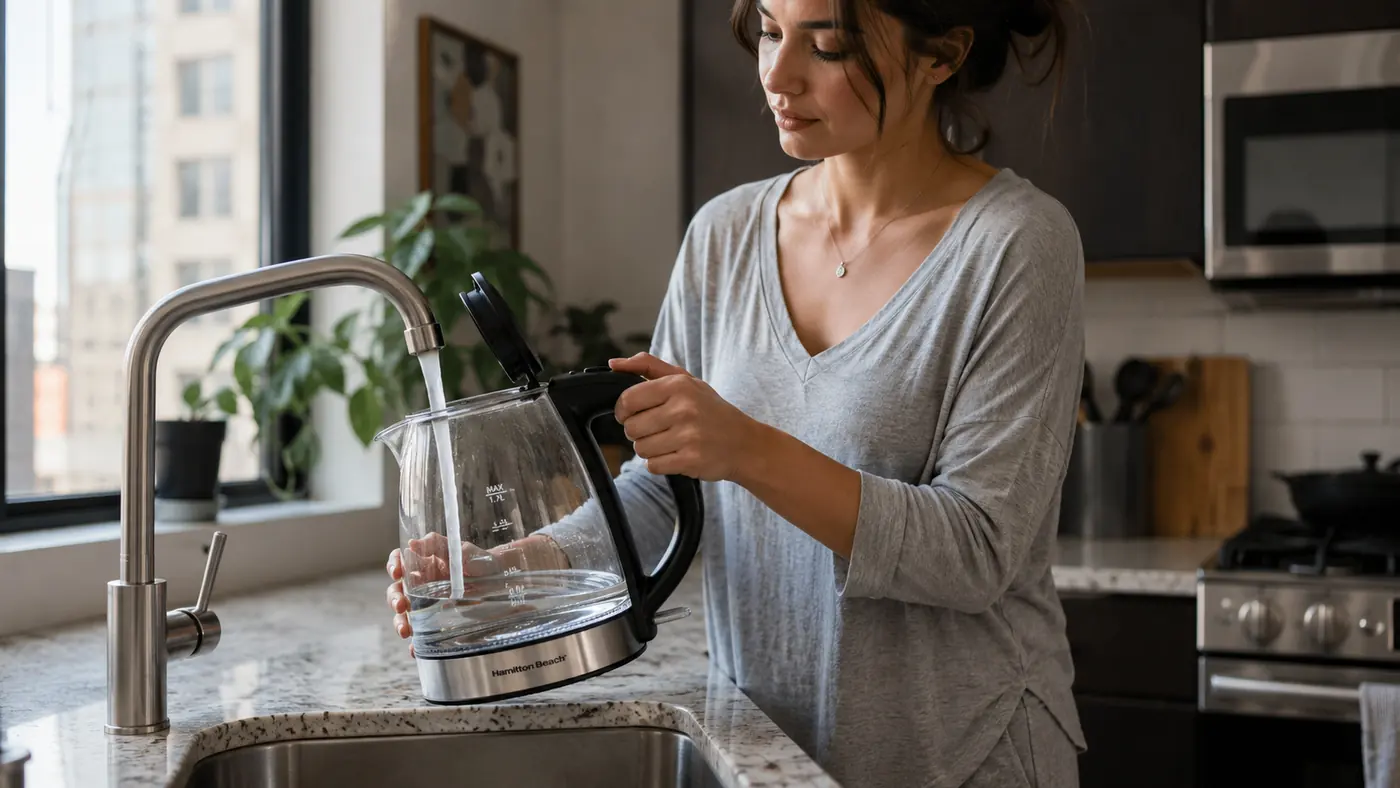
The single biggest thing that slows tea down is filling the kettle past what you need. The Hamilton Beach Electric Kettle holds a full liter, which sounds efficient until you realize that heating a full liter for one mug of tea adds close to two extra minutes for water you're going to pour down the drain later. I fill to just past the one-cup mark, which sits low on the side, for a single mug in the morning, and I fill to the two-cup line when Danny and I are both having tea before he leaves for work.
The fill markings run along the side of the kettle near the handle, and they're easy to read even without my glasses on at 6:45 in the morning, which matters more than it should. If you're consistently making tea for two people, filling to that mark every time instead of eyeballing it is the fastest habit change you can make, because underfilling can trigger the auto shutoff before the water is fully hot, and overfilling just wastes time and electricity you don't need to spend.
I made the overfilling mistake constantly the first few weeks I owned it, mostly out of habit from years of filling a full stovetop kettle no matter how much tea I actually needed. Once I started filling to the mark instead of filling from muscle memory, the whole process got noticeably quicker, and it's the kind of small change that pays off every single morning instead of just once.
Step 2: Match the water temperature to the tea, even without a dial
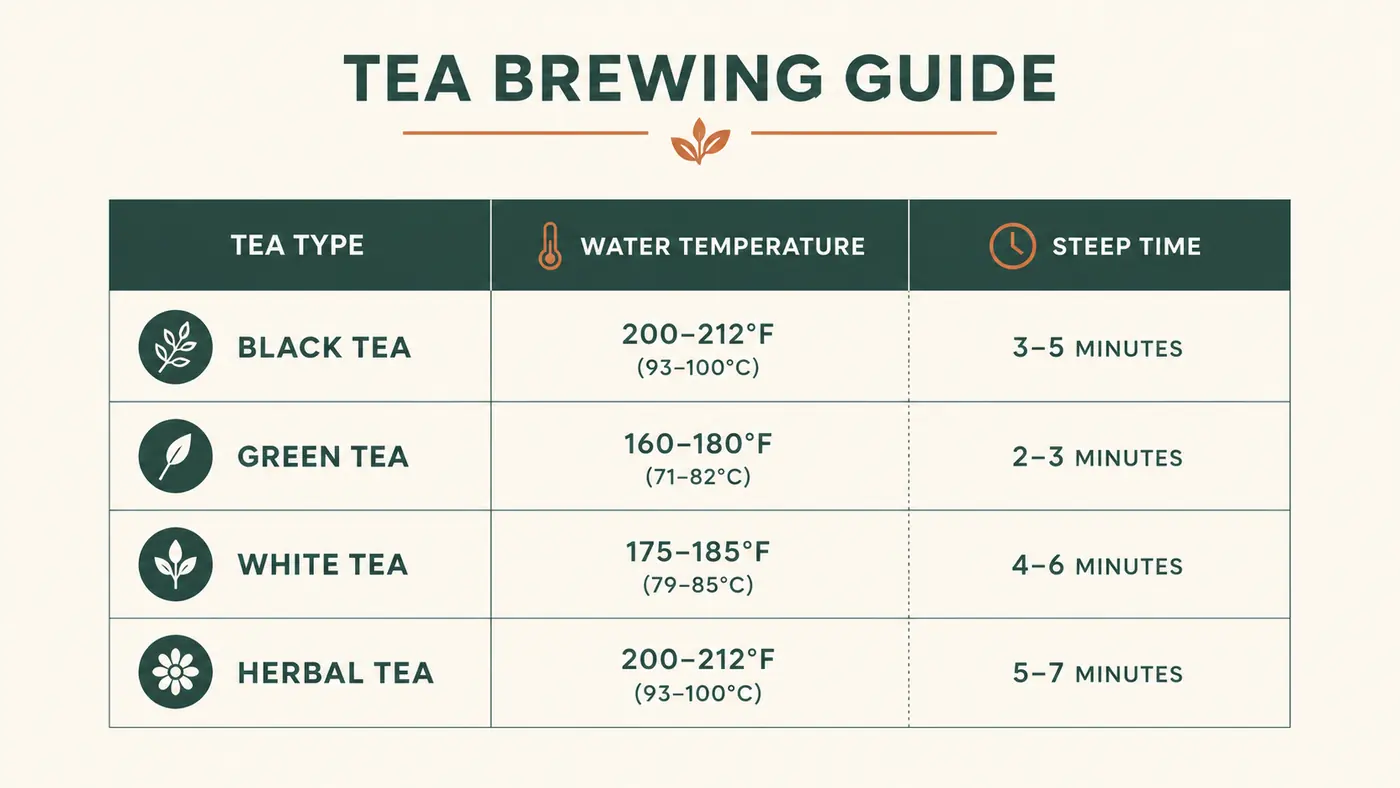
This is the step most people skip, and it's the reason a lot of green tea tastes bitter or grassy for no obvious reason. Full boiling water, right at 212 degrees, is correct for black tea and most herbal blends, but it's actually wrong for green tea and white tea. Water that hot scorches the delicate leaves almost instantly, pulling out excess tannins and leaving a flat, bitter cup instead of the lighter flavor you're after. The base Hamilton Beach Electric Kettle I use doesn't have a temperature dial, just an on switch and an auto shutoff at full boil, so I had to figure out a workaround instead of relying on a preset.
What works for me is letting the water sit for about ninety seconds after the kettle clicks off before I pour it over green tea, which drops the temperature down closer to the 175 degree range that green tea actually wants. For white tea, which likes it even cooler, I let it sit closer to two minutes, sometimes with a small splash of room-temperature water added to the mug first. It's not lab-precise, but it's close enough that the difference in the cup is obvious, and it takes a fraction of the time that heating water on the stove and babysitting a thermometer would take.
If your kitchen setup has you making green tea most mornings, it's worth timing this once with a kitchen timer so you know what ninety seconds actually feels like without watching the clock every time. After a week of doing it deliberately, I stopped needing the timer at all, and now I just start moving mugs and putting away dishes while the water cools, which means the wait isn't really dead time anymore.
Step 3: Steep by tea type, not by feel
Once the water's at the right temperature, steep time is the other variable that actually changes the flavor. Black tea gets three to five minutes at full boil, and I lean toward four unless I want it strong enough to add milk. Green tea gets two to three minutes at that cooled-down temperature from Step 2, since anything longer starts pulling bitterness back in even at the lower heat. White tea takes a little longer, closer to four or five minutes, but at the lowest temperature of the three. Herbal and rooibos blends are the most forgiving, five to seven minutes at full boiling water, and they're hard to oversteep the way real tea leaves are.
I keep a cheap phone timer running for this instead of guessing by color, because color is deceptive, especially with darker herbal blends that look done well before they've actually released their flavor. Once you've made the same two or three tea types a dozen times, the timing becomes second nature and you stop needing the timer at all. Getting steep time right is honestly what makes the difference between tea that tastes intentional and tea that tastes like you rushed it, and rushing it defeats the whole point of trying to make tea fast in the first place.
One habit that saves a step: I start the kettle before I've even decided which tea I'm making, since the water is going to need to boil either way. By the time I've picked a tea and pulled a mug down from the shelf, the water is usually already close to done, so the boil time and the decision time overlap instead of stacking on top of each other.
Step 4: Keep the kettle and filter clean so it keeps boiling fast
A dirty kettle is a slow kettle. Mineral scale builds up on the heating element over weeks of regular use, especially if your water is on the harder side like ours is, and that buildup makes the kettle work harder and take longer to reach a full boil. I rinse the mesh filter inside the spout after every few uses, since that's where loose tea residue and small mineral flecks tend to collect first, and a clogged filter will slow your pour even if the water itself boiled fine.
Once a month, I run a descaling cycle: equal parts water and white vinegar filled to about the halfway mark, brought to a boil, then left to sit for twenty minutes before I dump it and rinse the kettle two or three times with plain water. It takes about half an hour total but almost none of that is hands-on time. Skipping this step is the most common reason people think their kettle has slowed down or broken when really it's just coated in scale. If you're weighing this kettle against other small-kitchen picks before you buy, I broke down the tradeoffs in more detail in 10 reasons electric kettles save time in small kitchens.
The exterior barely needs attention beyond a quick wipe, since almost nothing splashes out during a normal boil, but I do give the base a wipe once a week since it sits close to where I'm chopping vegetables and it picks up flour dust and stray crumbs faster than I'd expect for something that never touches food directly.
Step 5: Give it one permanent spot on a crowded counter
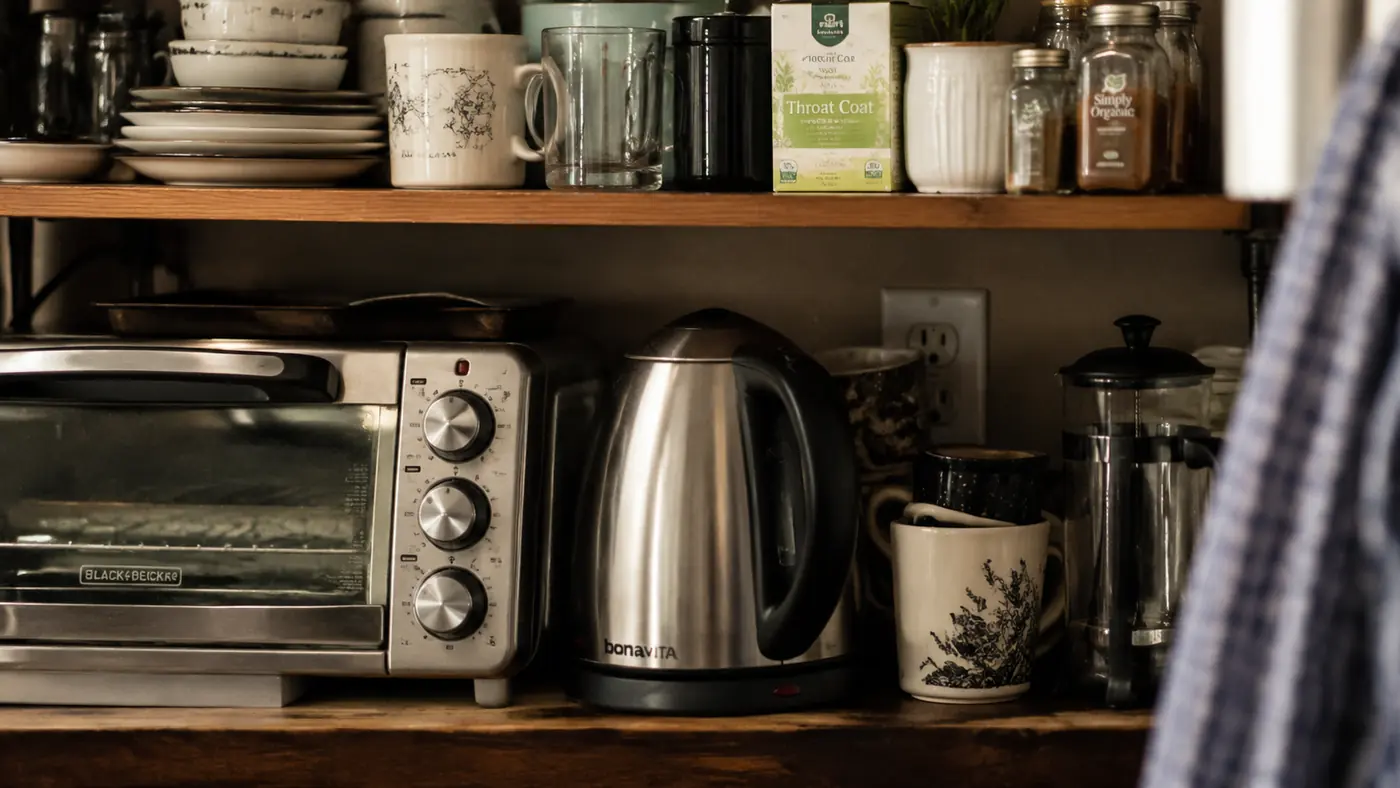
The last step isn't about the water at all, it's about where the kettle actually lives, because an appliance you have to dig out of a cabinet every morning stops being fast no matter how quickly it boils. My kitchen has two outlets and about three feet of usable counter, so the Hamilton Beach Electric Kettle shares a strip with the coffee maker on one side and gets unplugged from the toaster oven's outlet on days I'm making toast at the same time. I settled on keeping it closest to the sink, since that's where I fill it anyway, and that one decision cut out a step I used to do every single morning.
If your counter is even tighter than mine, the base is narrow enough to tuck into a corner between a cutting board and a spice rack without crowding either one. I wrote up a full six-month look at how this specific kettle has held up to daily use, fill lines, auto shutoff and all, in my long-term Hamilton Beach Electric Kettle review, if you want the longer version before you commit counter space to it.
What Else Helps
A couple of small habits speed things up beyond the kettle itself. I keep mugs pre-set on the counter the night before if I know Danny and I are both having tea, so there's no scrambling for clean mugs while the water's heating. I also keep the tea tin and a small spoon in the same drawer right below where the kettle sits, which sounds minor but saves real time when you're moving fast in a kitchen with limited storage. None of this changes how the kettle performs, it just removes the little friction points that make a five-minute task feel longer than it is.
I also keep loose tea in small labeled tins instead of a mixed drawer, since digging through unmarked bags for the right blend at seven in the morning is its own kind of slow. It took maybe twenty minutes one weekend to sort everything into black, green, white, and herbal, and it's saved me guessing every single weekday since.
The fastest cup of tea isn't the one with the hottest water, it's the one where every step, from the fill line to the mug already sitting on the counter, is already decided before you start.
Skip the Stovetop Wait, Boil What You Need in Minutes
Once you've got the fill line, the cool-down timing for delicate teas, and a permanent spot on the counter figured out, this kettle turns tea from a chore into something you barely think about.
Amazon Check Today's Price on Amazon →